Best Ever Karaage with Udon Noodles
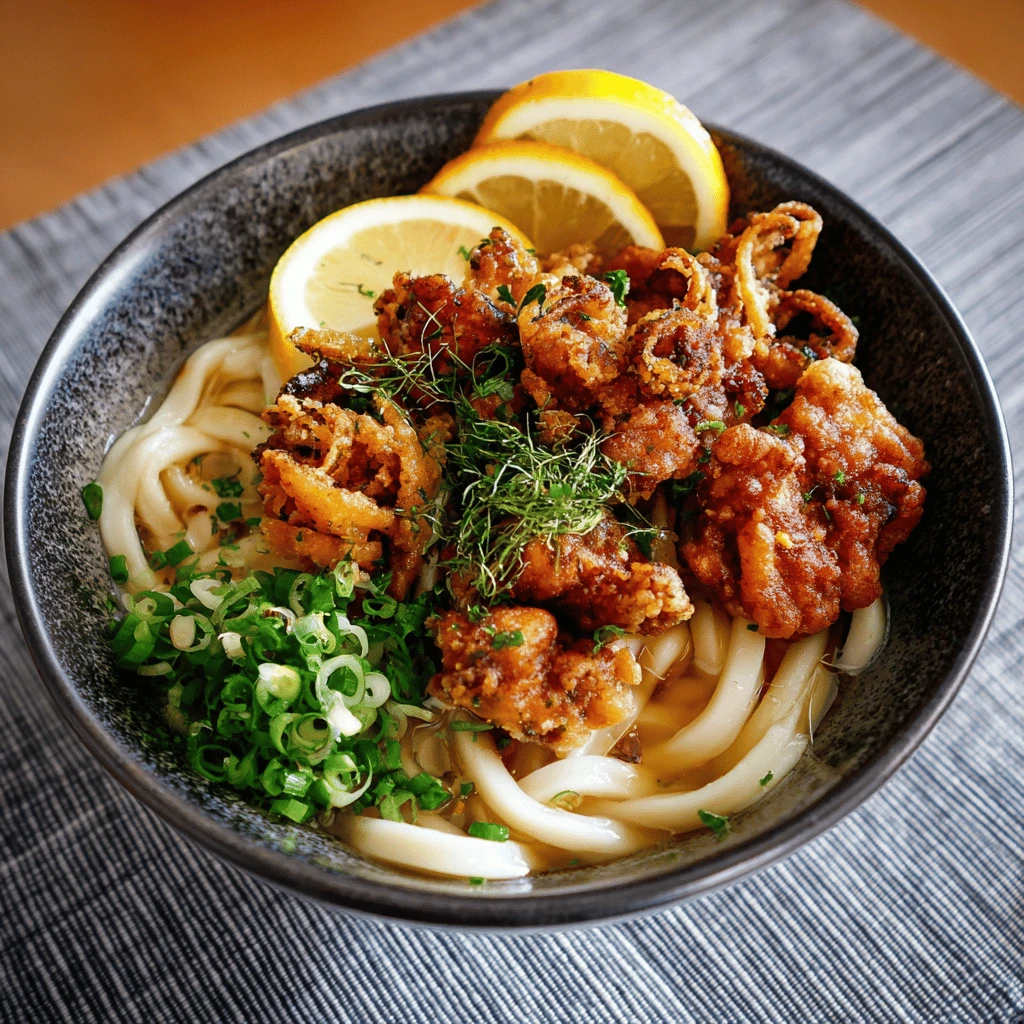
Karaage with Udon Noodles – a delightful fusion of crispy, savory Japanese fried chicken paired with the comforting slurp of thick, chewy wheat noodles in a flavorful broth. This dish isn’t just about satisfying hunger; it’s an experience, a journey through textures and tastes that dances on your palate. This guide will walk you through creating the best ever Karaage Udon, from perfectly crispy chicken to a deeply satisfying noodle soup.
Part 1: The Art of Karaage: Crispy Chicken Perfection
Karaage, Japanese fried chicken, is an art form. It’s not just about deep-frying chicken; it’s about achieving a specific texture and flavor. The key lies in the marinade and the frying technique.
Choosing the Right Chicken
While boneless, skinless chicken thighs are commonly used due to their juiciness and resistance to drying out during frying, boneless chicken breast can also be used. If using breast, be sure to cut it into smaller, uniform pieces and avoid overcooking. Thighs will provide a richer flavor due to their higher fat content.
The Magic of the Marinade
The marinade is what infuses the chicken with its signature savory flavor. A classic karaage marinade consists of:
- Soy Sauce: Provides the base of umami and saltiness. Use a good quality Japanese soy sauce for the best flavor.
- Ginger: Freshly grated ginger adds a warm, aromatic spice.
- Garlic: Freshly minced garlic brings pungent depth.
- Sake (or Mirin): Adds a touch of sweetness and helps tenderize the chicken. If you don’t have sake or mirin, a small amount of dry sherry or rice vinegar (plus a pinch of sugar) can be substituted.
- Sesame Oil: Contributes a nutty aroma and subtle flavor.
Marinate the chicken for at least 30 minutes, but preferably for a few hours or even overnight in the refrigerator. This allows the flavors to penetrate deep into the meat.
Achieving the Crispy Coating
The secret to crispy karaage lies in the coating. While flour alone can be used, a combination of potato starch (katakuriko) and all-purpose flour produces the most delightfully crunchy texture. Potato starch creates a lighter, crispier crust than flour alone.
- Potato Starch (Katakuriko): This is the key ingredient for that signature karaage crunch.
- All-Purpose Flour: Adds structure to the coating and helps it adhere to the chicken.
- Optional: Spices: Consider adding a pinch of white pepper, five-spice powder, or even a touch of cayenne pepper for a subtle kick.
Before frying, drain the chicken from the marinade and toss it in the starch/flour mixture, ensuring each piece is evenly coated.
The Frying Process
Temperature is paramount when frying karaage. If the oil is not hot enough, the chicken will absorb too much oil and become soggy. If the oil is too hot, the outside will burn before the inside is cooked through. Aim for an oil temperature of around 325-350°F (160-175°C).
- Double Frying: This technique is crucial for achieving maximum crispiness. Fry the chicken once for about 3-4 minutes, until lightly golden. Remove and let rest for a few minutes. Then, fry again for another 1-2 minutes, until deep golden brown and crispy. The second frying crisps up the exterior even further and ensures the chicken is cooked through.
- Oil Choice: Use a neutral-flavored oil with a high smoke point, such as vegetable oil, canola oil, or peanut oil.
Part 2: Crafting the Perfect Udon Noodle Soup
Karaage is fantastic on its own, but it truly shines when paired with a comforting bowl of Udon noodle soup. The rich, crispy chicken complements the savory broth and chewy noodles perfectly.
Understanding Udon Noodles
Udon noodles are thick, chewy wheat noodles that are a staple in Japanese cuisine. They come in various forms, including:
- Fresh Udon: These are the best option for texture and flavor. Look for them in the refrigerated section of Asian markets.
- Dried Udon: A convenient option that requires boiling before use.
- Frozen Udon: These are pre-cooked and simply need to be reheated.
Fresh udon noodles provide the best texture, while frozen udon are the most convenient option.
Building a Flavorful Broth (Dashi)
The foundation of any good udon soup is the broth, and in Japanese cuisine, that often starts with dashi. Dashi is a simple yet deeply flavorful broth made from kombu (dried kelp) and katsuobushi (dried bonito flakes).
- Kombu Dashi: This is a vegetarian dashi made by simmering kombu in water. It provides a subtle umami flavor.
- Awase Dashi: This is the most common type of dashi, made by combining kombu and katsuobushi. It has a richer, more complex flavor than kombu dashi alone.
While making dashi from scratch is relatively easy, instant dashi granules are a convenient alternative.
Seasoning the Broth
Once you have your dashi, it’s time to season it. A basic udon broth typically includes:
- Soy Sauce: Adds saltiness and umami.
- Mirin: Adds sweetness and balances the saltiness of the soy sauce.
- Sake: Adds depth of flavor.
Adjust the amounts of soy sauce and mirin to your taste. Some people prefer a sweeter broth, while others prefer a saltier one.
Adding Depth with Aromatics and Vegetables
While the basic broth is delicious on its own, adding aromatics and vegetables can elevate it even further. Consider adding:
- Green Onions: Sliced green onions add a fresh, slightly pungent flavor.
- Shiitake Mushrooms: These add an earthy, umami-rich flavor.
- Spinach: Adds a touch of freshness and color.
- Wakame Seaweed: Rehydrated wakame seaweed adds a briny, ocean-like flavor.
Part 3: Assembling the Perfect Bowl of Karaage Udon
Now that you have your crispy karaage and flavorful udon soup, it’s time to assemble the perfect bowl.
Cooking the Udon Noodles
Cook the udon noodles according to the package directions. Be careful not to overcook them, as they will become mushy. Drain the noodles and rinse them under cold water to stop the cooking process and remove excess starch.
Arranging the Bowl
- Warm the Bowl: Warming the bowl will help keep the soup hot.
- Add the Noodles: Place the cooked udon noodles in the bottom of the bowl.
- Pour in the Broth: Ladle the hot broth over the noodles.
- Top with Karaage: Arrange the crispy karaage pieces on top of the noodles and broth.
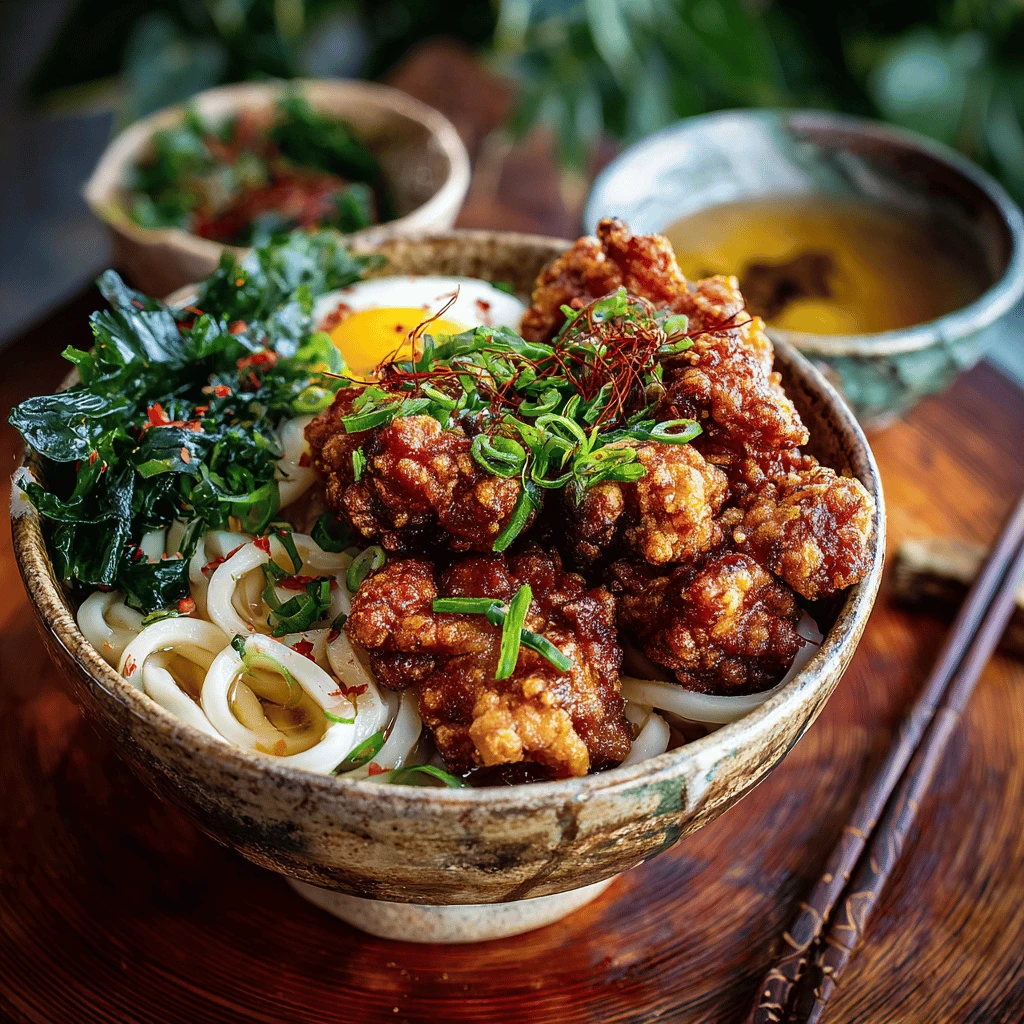
- Garnish: Garnish with sliced green onions, a sprinkle of sesame seeds, and a nori seaweed strip for a beautiful and flavorful presentation.
Customizing Your Bowl
Feel free to customize your bowl with other toppings, such as:
- Soft-boiled Egg: A runny soft-boiled egg adds richness and creaminess.
- Kamaboko (Fish Cake): Sliced kamaboko adds a subtle sweetness and a unique texture.
- Tempura Flakes (Tenkasu): Adds extra crunch.
- Chili Oil: For those who like a little heat, a drizzle of chili oil is a great addition.
Part 4: Tips and Tricks for the Best Karaage Udon
Here are some tips and tricks to help you make the best karaage udon:
- Use High-Quality Ingredients: The better the ingredients, the better the final dish will taste. Use good quality soy sauce, fresh ginger and garlic, and authentic Japanese sake or mirin.
- Don’t Overcrowd the Frying Pan: Frying too many pieces of chicken at once will lower the oil temperature and result in soggy karaage. Fry in batches.
- Rest the Chicken Before Frying Again: Resting the chicken after the first frying allows the juices to redistribute and helps the coating adhere better for the second frying.
- Adjust the Broth to Your Taste: The amount of soy sauce and mirin in the broth can be adjusted to your liking. Taste and adjust as needed.
- Use Freshly Cooked Noodles: Freshly cooked udon noodles are always the best option for texture and flavor.
- Serve Immediately: Karaage udon is best served immediately while the karaage is still crispy and the broth is hot.
Part 5: Serving and Enjoying Your Karaage Udon
Karaage Udon is a complete meal in a bowl, perfect for a comforting lunch or dinner. Serve it hot and enjoy the symphony of flavors and textures.
Serving Suggestions
- With a Side of Pickled Vegetables: Pickled vegetables, such as tsukemono, provide a refreshing contrast to the richness of the karaage and the savory broth.
- With a Small Salad: A simple green salad with a light vinaigrette can also be a nice accompaniment.
- With a Glass of Sake or Beer: Sake or Japanese beer pairs perfectly with karaage udon.
Enjoying the Experience
Karaage Udon is more than just a meal; it’s an experience. Take your time to savor each bite, appreciating the crispy chicken, the chewy noodles, and the flavorful broth. Close your eyes and let the flavors transport you to Japan.
Storage and Reheating
While karaage udon is best enjoyed fresh, leftovers can be stored in the refrigerator. The karaage will lose some of its crispness upon reheating, but it will still be delicious.
- Store the Components Separately: Store the karaage, noodles, and broth separately to prevent the noodles from becoming soggy.
- Reheat the Broth: Reheat the broth in a saucepan over medium heat until simmering.
- Reheat the Noodles: Reheat the noodles in the microwave or by briefly blanching them in boiling water.
- Reheat the Karaage: Reheat the karaage in a preheated oven at 350°F (175°C) until heated through. You can also reheat it in a toaster oven or air fryer for extra crispness.
Frequently Asked Questions (FAQ)
Q: Can I use gluten-free flour for the karaage?
Yes, you can use a gluten-free flour blend for the karaage, but the texture may be slightly different. Potato starch (katakuriko) is naturally gluten-free and contributes significantly to the crispiness, so make sure your blend includes it.
Q: Can I make the karaage in an air fryer?
Yes, you can air fry the karaage. Preheat your air fryer to 375°F (190°C). Place the chicken pieces in a single layer in the air fryer basket, making sure not to overcrowd them. Cook for 12-15 minutes, flipping halfway through, until golden brown and cooked through.
Q: Can I make the dashi ahead of time?
Yes, you can make dashi ahead of time. It can be stored in the refrigerator for up to 3 days or frozen for up to 1 month.
Q: Can I use different types of noodles?
While udon noodles are traditional for this dish, you can experiment with other types of noodles, such as soba or ramen noodles. However, the texture and flavor profile will be different.
Q: How do I make vegetarian karaage udon?
To make vegetarian karaage udon, use a vegetarian dashi made from kombu only. For the karaage, substitute the chicken with firm tofu, portobello mushrooms, or cauliflower. Marinate and coat them similarly to the chicken and fry until golden brown and crispy.