The Ultimate Honey Ham Sheet Pan Dinner: A Simple Weeknight Masterpiece
Finding a meal that balances effortless preparation with a sophisticated flavor profile is the ultimate goal for any home cook. The Honey Ham Sheet Pan Dinner is the perfect solution, offering a harmonious blend of salty, savory ham and a sweet, caramelized honey glaze, all roasted alongside vibrant, seasonal vegetables. This one-pan wonder minimizes cleanup while maximizing taste, making it an ideal choice for busy weeknights or a relaxed Sunday supper. By roasting everything together, the juices from the ham and the richness of the glaze infuse the vegetables, creating a cohesive and deeply satisfying meal that feels far more labor-intensive than it actually is.
Ingredients
-
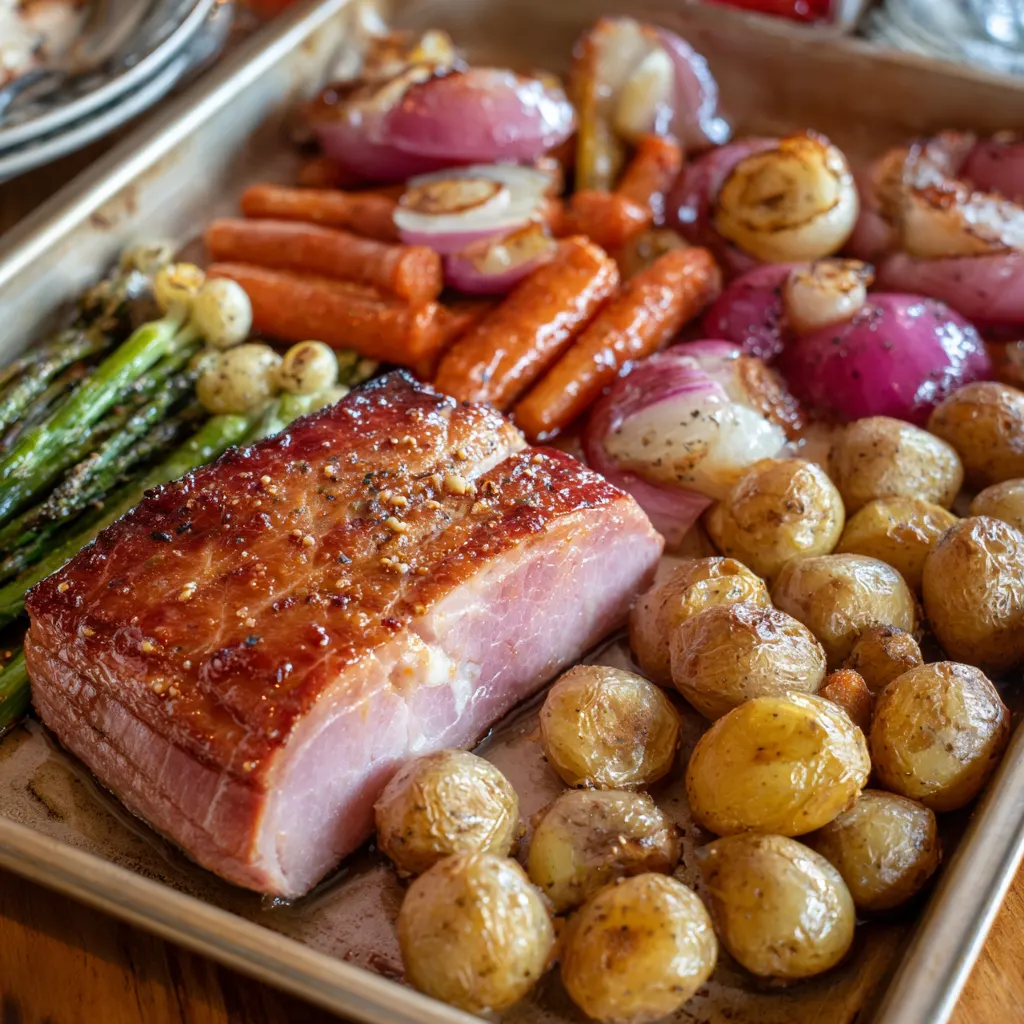
Ham: 1.5 to 2 lbs of thick-cut ham steaks or fully cooked smoked ham, cut into 1-inch cubes.
-
Vegetables: 1 lb baby potatoes (halved), 1/2 lb fresh green beans (trimmed), and 2 large carrots (peeled and sliced into rounds).
-
The Honey Glaze: 1/3 cup honey, 2 tablespoons Dijon mustard, 2 tablespoons melted unsalted butter, and 1 tablespoon brown sugar.
-
Seasoning: 3 cloves garlic (minced), 1 teaspoon dried thyme, 1/2 teaspoon smoked paprika, salt, and freshly cracked black pepper to taste.
-
Oil: 2 tablespoons olive oil (for the vegetables).
-
Garnish: Fresh parsley, chopped.
Step-by-Step Instructions
-
Prep the Oven and Pan: Preheat your oven to 400°F (200°C). Line a large, rimmed baking sheet with parchment paper or aluminum foil for easy cleanup.
-
Season the Vegetables: In a large bowl, toss the halved potatoes and sliced carrots with olive oil, minced garlic, salt, pepper, and dried thyme. Spread them in a single layer on the prepared baking sheet.
-
Initial Roast: Place the potatoes and carrots in the oven and roast for 15–20 minutes. These denser vegetables require a head start to ensure they are tender by the time the ham is heated through.
-
Prepare the Glaze: While the vegetables roast, whisk together the honey, Dijon mustard, melted butter, brown sugar, and smoked paprika in a small bowl until smooth.
-
Add Ham and Green Beans: Remove the baking sheet from the oven. Move the potatoes and carrots to one side to make room for the ham and green beans. Place the ham cubes (or steaks) and green beans on the pan.
-
Apply the Glaze: Drizzle about two-thirds of the honey glaze over the ham and green beans, and lightly toss the vegetables to coat. Brush the remaining glaze specifically over the ham pieces.
-
Final Roast: Return the pan to the oven and roast for another 10–15 minutes, or until the ham is caramelized at the edges, the green beans are tender-crisp, and the potatoes are golden brown.
-
Serve: Remove from the oven and let the pan rest for a few minutes. Garnish with fresh parsley and serve directly from the tray for a rustic presentation.
Selecting the Best Ingredients for Maximum Flavor
The success of a sheet pan dinner lies in the quality of its components. Since ham is the star of this dish, choosing the right cut is essential. Thick-cut ham steaks are widely available and provide a meaty, steak-like texture that holds up well under high heat. If you are using leftovers from a holiday spiral ham, ensure the pieces are cut into uniform chunks so they heat evenly without drying out. A smoked ham variety adds an extra layer of complexity that pairs beautifully with the sweetness of the honey.
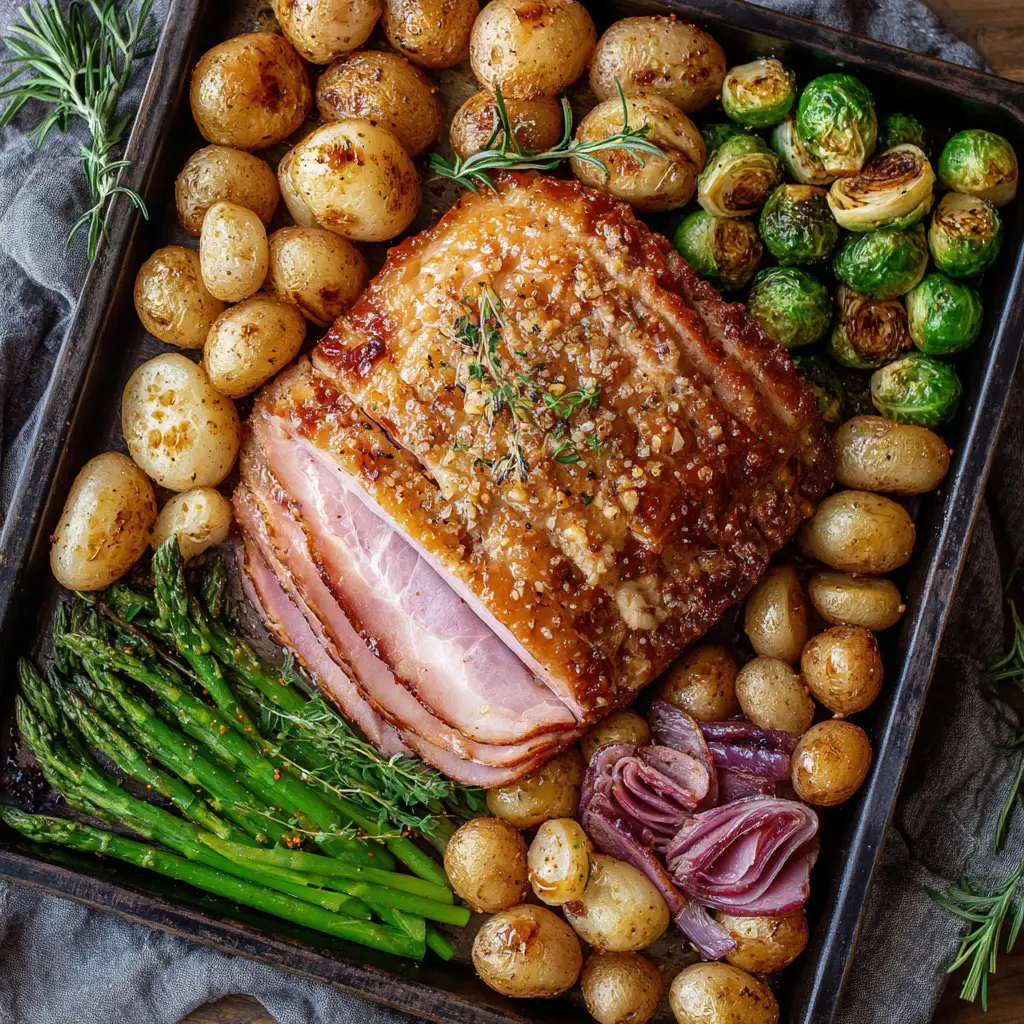
Vegetable selection is equally important for both nutrition and aesthetics. While potatoes and carrots are the traditional choices due to their hardiness, you can experiment with the seasons. In the spring, asparagus or snap peas make excellent additions. In the autumn, cubed butternut squash or Brussels sprouts offer a nutty earthiness. The key is to group vegetables with similar cooking times or to use the “staggered start” method—roasting tougher root vegetables first before adding delicate greens.
The glaze is where the magic happens. Using a high-quality honey, such as clover or wildflower, ensures a clean sweetness. The Dijon mustard acts as an emulsifier, binding the honey and butter while providing a sharp, tangy counterpoint to the sugar. If you prefer a bit of heat, a pinch of cayenne pepper or a teaspoon of red pepper flakes can be whisked into the glaze to create a “hot honey” effect that elevates the entire dish.
The Science of the Perfect Sheet Pan Roast
To achieve the desired caramelization without ending up with soggy vegetables, understanding the mechanics of your sheet pan is vital. Crowding is the enemy of a good roast. If the ingredients are packed too tightly, they will steam in their own moisture rather than crisping up. For this recipe, use the largest baking sheet you have, or split the ingredients across two pans if necessary. This allows the hot air to circulate freely around each piece of ham and vegetable.
The temperature of 400°F is the “sweet spot” for sheet pan cooking. It is hot enough to trigger the Maillard reaction—the chemical reaction between amino acids and reducing sugars that gives browned food its distinctive flavor—but not so hot that the honey in the glaze burns before the vegetables are cooked through. If you notice the honey glaze darkening too quickly, you can loosely tent the ham with foil for the final few minutes of roasting.
Another professional tip is the use of parchment paper versus foil. While foil is excellent for heat conduction and achieving a crusty bottom on potatoes, parchment paper is superior for sticky glazes. Honey-based sauces can become very difficult to scrub off a pan if they burn; parchment provides a non-stick surface that ensures every bit of that delicious glaze stays on your food rather than sticking to the metal.
Creative Variations and Global Inspirations
While the honey-Dijon combination is a classic, the sheet pan method is an open canvas for various flavor profiles. For a Hawaiian-inspired twist, replace the carrots with fresh pineapple chunks and bell peppers. Use a glaze made of pineapple juice, soy sauce, ginger, and honey. The acidity of the pineapple cuts through the saltiness of the ham, creating a bright, tropical meal that children especially love.
For those who prefer a more savory, autumnal profile, consider a Maple-Balsamic version. Substitute the honey with pure maple syrup and the Dijon with a splash of balsamic glaze. Swap the green beans for Brussels sprouts and toss in some halved pecans during the last five minutes of roasting. This variation brings a sophisticated, woody sweetness to the ham that is perfect for cooler weather.
If you are looking to lower the carbohydrate content, you can easily swap the potatoes for cauliflower florets or radishes. When roasted, radishes lose their sharp bite and become remarkably similar to potatoes in texture and mildness. Simply adjust the roasting time, as cauliflower and radishes typically cook faster than dense potatoes, usually requiring about 20–25 minutes in total.
Storage, Reheating, and Making the Most of Leftovers
The Honey Ham Sheet Pan Dinner is an excellent candidate for meal prepping. The flavors of the glaze actually deepen after a day in the refrigerator, making the leftovers just as good, if any remain. Store any extra portions in airtight containers for up to three to four days. To maintain the texture of the vegetables, it is best to reheat the meal in the oven or an air fryer at 350°F until warmed through. This prevents the potatoes from becoming rubbery, which can sometimes happen in the microwave.
If you find yourself with a small amount of leftovers that isn’t quite enough for a full meal, these ingredients can be repurposed creatively. Chop the ham and roasted vegetables into smaller pieces and fold them into an omelet or a frittata for a gourmet breakfast. Alternatively, toss the cold leftovers with some fresh arugula, a squeeze of lemon, and an extra drizzle of olive oil for a hearty roasted vegetable salad.
Ultimately, the beauty of this dish lies in its versatility and the joy of a stress-free kitchen. By mastering the basic technique of the honey ham sheet pan dinner, you gain a reliable, delicious recipe that can be adapted to suit any palate, season, or schedule. It proves that you don’t need a sink full of pots and pans to create a meal that is both nourishing and worthy of a place at the center of the table.