The Ultimate Honey Glazed Ham with Pineapple
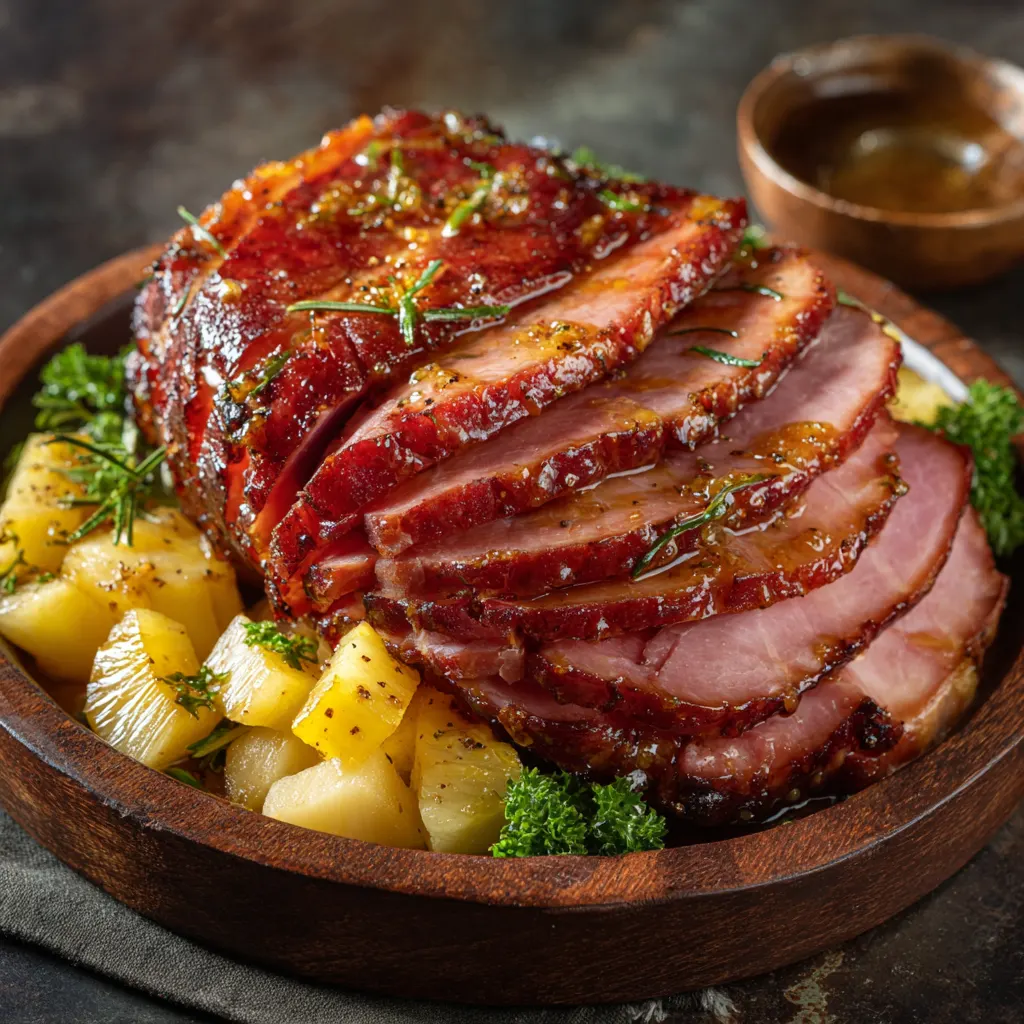
There is perhaps no centerpiece more iconic for a festive gathering than a beautifully caramelized, honey-glazed ham adorned with golden pineapple rings. This dish strikes the perfect balance between savory, salty pork and the bright, acidic sweetness of tropical fruit, creating a flavor profile that has remained a favorite for generations. Whether it is the focal point of a holiday dinner or the star of a Sunday family brunch, a honey-glazed ham is as much about the visual presentation as it is about the melt-in-your-mouth texture. By combining a slow-roasting technique with a high-heat glaze finish, you achieve a ham that is deeply flavorful on the inside with a sticky, crackling crust on the outside.
Ingredients
-
Ham: 1 (8–10 lb) fully cooked bone-in spiral-sliced ham
-
Honey: 1 cup high-quality clover or wildflower honey
-
Pineapple: 1 can (20 oz) pineapple slices in juice (reserve the juice)
-
Brown Sugar: ½ cup packed light brown sugar
-
Dijon Mustard: 2 tablespoons
-
Spices: ½ teaspoon ground cloves and ¼ teaspoon ground cinnamon
-
Garnish: 1 small jar maraschino cherries and whole cloves (optional)
Step-by-Step Instructions
-
Preparation: Preheat your oven to 325°F (165°C). Remove the ham from its packaging and discard the plastic disk covering the bone. Place the ham cut-side down in a heavy roasting pan.
-
Hydration: Pour about half of the reserved pineapple juice into the bottom of the pan. This creates a steaming environment that prevents the meat from drying out during the reheating process.
-
The Pineapple Garnish: Use toothpicks to secure the pineapple slices all over the surface of the ham. If desired, place a maraschino cherry in the center of each pineapple ring and pin it with a whole clove.
-
Initial Roast: Cover the roasting pan tightly with heavy-duty aluminum foil to trap moisture. Bake for approximately 12–15 minutes per pound, or until a meat thermometer reached an internal temperature of 130°F.
-
Prepare the Glaze: While the ham roasts, combine the honey, brown sugar, Dijon mustard, ground cloves, cinnamon, and the remaining pineapple juice in a small saucepan. Simmer over medium heat for 5–8 minutes until the mixture thickens into a syrupy consistency.
-
Glazing: Remove the ham from the oven and increase the oven temperature to 400°F (205°C). Carefully remove the foil. Generously brush or spoon half of the glaze over the ham and the pineapple rings.
-
The Caramelization Finish: Return the ham to the oven, uncovered. Bake for another 15–20 minutes, basting with the remaining glaze every 5–7 minutes. Watch closely to ensure the sugar doesn’t burn, but aim for a deep, golden-brown “lacquered” finish.
-
Resting: Once the internal temperature reaches 140°F, remove the ham from the oven. Transfer it to a carving board and let it rest for at least 15–20 minutes. This allows the juices to redistribute, ensuring every slice is moist.
Choosing the Best Ham for Your Table
Selecting the right cut of meat is the foundation of a successful meal. When browsing the grocery store or butcher shop, you will typically encounter three main varieties: city hams, country hams, and fresh hams. For a Honey Glazed Ham with Pineapple, a “city ham” is the standard choice. These are hams that have been cured in a brine and are usually sold fully cooked or partially cooked.
Bone-in hams are widely considered superior for flavor and moisture. The bone acts as a heat conductor during the roasting process and adds a depth of savory flavor that boneless hams often lack. Furthermore, the leftover ham bone is an invaluable ingredient for future soups and stews. If ease of serving is your priority, a spiral-sliced ham is the most convenient option. These are pre-sliced at the processing plant, allowing you to pull away perfect portions without needing master-level carving skills. However, because they are pre-sliced, they are more prone to drying out, which makes the foil-tenting and basting steps of this recipe particularly crucial.
The Science of the Perfect Honey Pineapple Glaze
The glaze is more than just a topping; it is a chemical reaction that creates the “crust” or bark that people crave. A successful glaze requires three components: sugar, acid, and aromatics. In this recipe, the honey and brown sugar provide the sweetness and the viscosity. As the heat rises in the oven, these sugars undergo caramelization and the Maillard reaction, resulting in a complex, nutty flavor and a sticky texture.
The pineapple juice and Dijon mustard provide the necessary acidity. This acid cuts through the richness of the pork fat and balances the intense sweetness of the honey. Without it, the dish can feel cloying. Finally, the warm spices—cloves and cinnamon—provide the aromatic depth that characterizes a traditional holiday ham. By simmering the glaze on the stovetop before applying it to the meat, you reduce the water content, ensuring the glaze clings to the ham rather than sliding off into the bottom of the pan.
Essential Cooking Techniques for Maximum Juiciness
The biggest challenge when preparing a holiday ham is avoiding the dreaded dry, leathery texture. Since most hams purchased today are already fully cooked, the goal of the oven time is not to “cook” the meat, but to gently reheat it to a palatable temperature while developing the exterior glaze.
To maintain moisture, always start with the ham cut-side down. This protects the largest surface area of the meat from direct heat. Using a roasting pan with a rack can help, but placing the ham directly in the juice in the pan is often better for “steaming” the meat. The most important tool in your kitchen for this process is a digital meat thermometer. Overcooking by even ten degrees can result in a significant loss of moisture. Aim to remove the ham from the oven when it hits 140°F; the carry-over heat will bring it to the perfect serving temperature while it rests.
Serving Pairings and Repurposing Your Feast
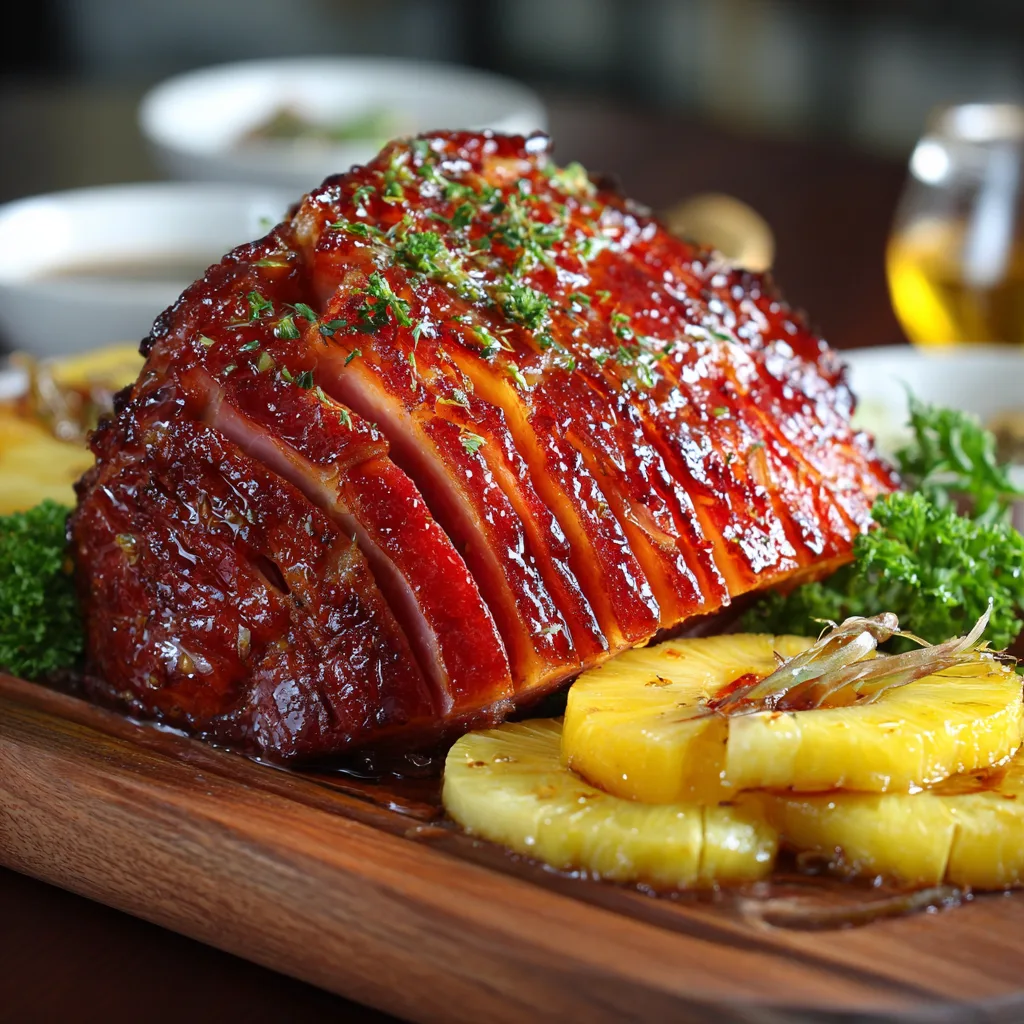
A Honey Glazed Ham with Pineapple is a bold, sweet-and-savory centerpiece that pairs beautifully with a variety of side dishes. To balance the sweetness of the glaze, consider serving it alongside roasted Brussels sprouts with balsamic glaze, or a sharp, vinegar-based coleslaw. For a more traditional approach, garlic mashed potatoes or a rich macaroni and cheese provide a creamy contrast to the lean pork. The bright yellow pineapple rings should be served alongside the meat, as they provide a burst of warm, juicy fruit that acts as a natural palate cleanser between bites.
One of the greatest joys of a large ham is the leftovers. The high sugar content of the honey glaze makes the leftover slices perfect for “ham steaks” seared in a cast-iron skillet for breakfast. Beyond the morning meal, diced ham can be folded into a split pea soup, tossed into a creamy carbonara, or piled high on brioche buns with melted Swiss cheese and a swipe of honey mustard for the ultimate sliders. By utilizing the bone for a slow-simmered stock, you ensure that every part of your investment is used, extending the holiday spirit for days to come.