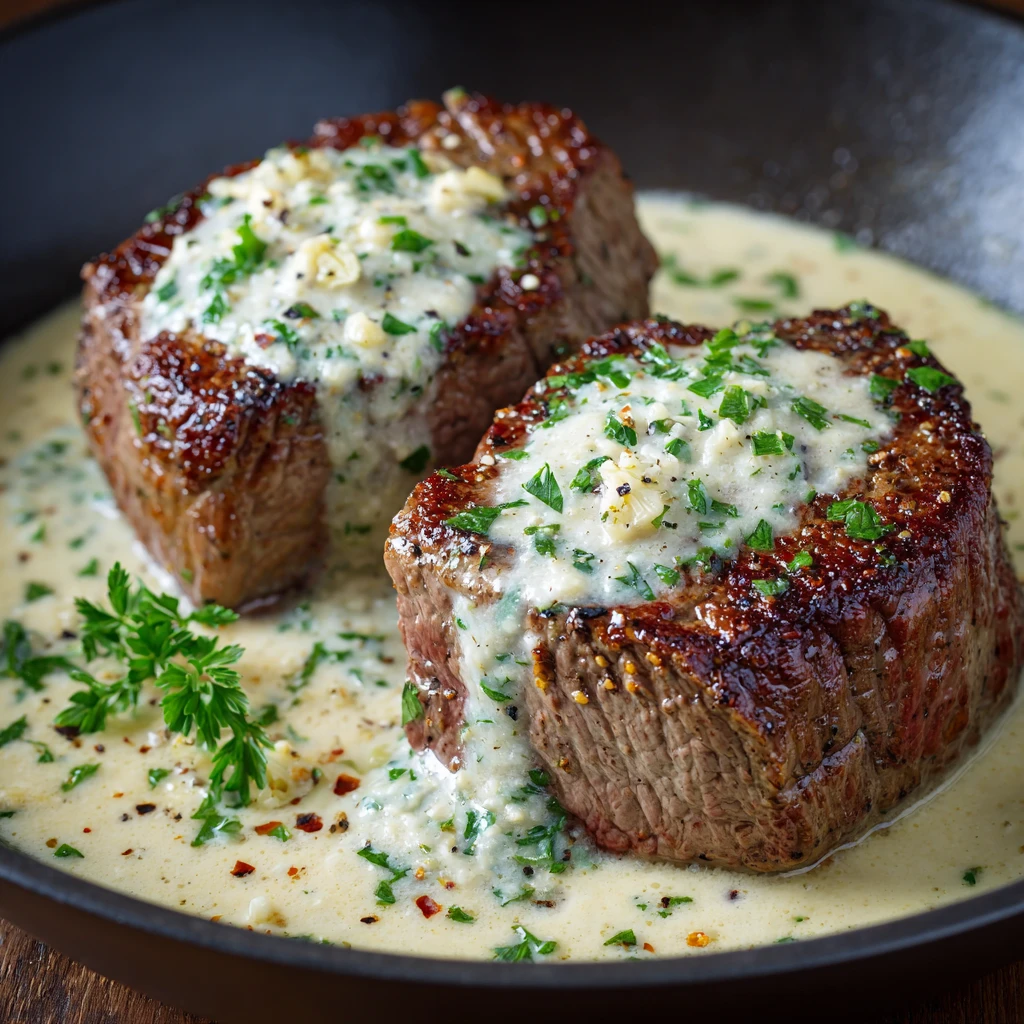
Creamy Garlic Parmesan FILLET
Ingredients
- 4 (6-ounce) fillet steaks, about 1-inch thick
- 2 tablespoons olive oil
- 4 cloves garlic, minced
- 1/2 cup heavy cream
- 1/4 cup grated Parmesan cheese
- 2 tablespoons butter
- 1 tablespoon fresh parsley, chopped
- 1/2 teaspoon salt
- 1/4 teaspoon black pepper
- Optional: Pinch of red pepper flakes
Step-by-Step
1. Pat the fillet steaks dry with paper towels. Season both sides with salt and pepper.
2. Heat the olive oil in a large skillet over medium-high heat.
3. Add the steaks to the hot skillet and sear for 3-4 minutes per side for medium-rare, or longer depending on your desired level of doneness. Use a meat thermometer to ensure accuracy.
4. Remove the steaks from the skillet and set aside to rest.
5. Reduce the heat to medium. Add the butter and minced garlic to the skillet. Sauté for about 1 minute, until fragrant, being careful not to burn the garlic.
6. Pour in the heavy cream and bring to a simmer.
7. Stir in the Parmesan cheese until melted and the sauce is smooth. Add red pepper flakes for a touch of heat, if desired.
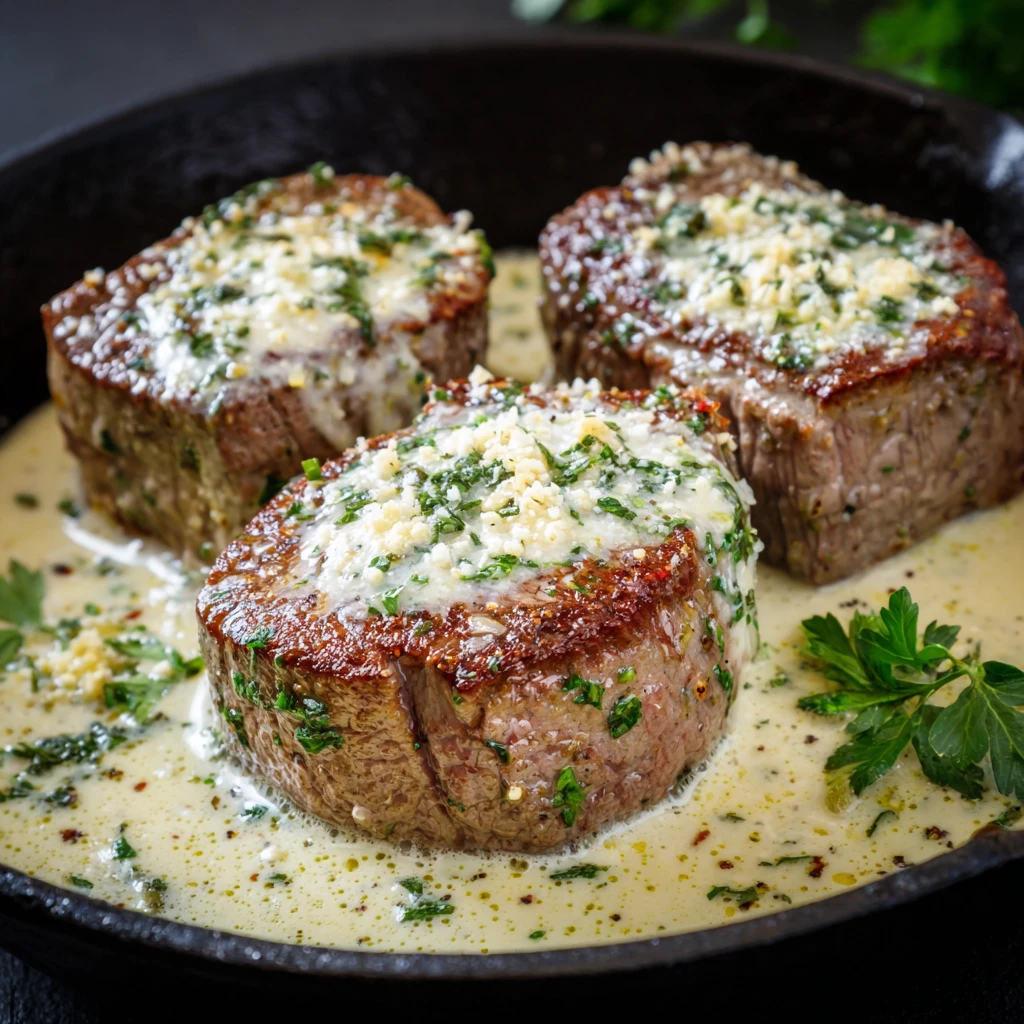
8. Return the steaks to the skillet and spoon the creamy garlic Parmesan sauce over them.
9. Let the steaks simmer in the sauce for 1-2 minutes, allowing the flavors to meld.
10. Garnish with fresh parsley.
11. Serve immediately.
Selecting the Perfect Fillet
Choosing the right fillet steak is crucial for a truly exceptional Creamy Garlic Parmesan FILLET. Quality matters significantly, impacting both the flavor and texture of the final dish.
Understanding Different Grades
The United States Department of Agriculture (USDA) grades beef based on factors like marbling (intramuscular fat), maturity, and appearance. Prime is the highest grade, boasting abundant marbling and typically found in upscale restaurants and butcher shops. Choice is the next highest grade, offering good marbling and flavor at a more affordable price. Select is the lowest grade commonly available in supermarkets, with less marbling and potentially less tenderness.
Marbling: The Key to Tenderness and Flavor
Marbling refers to the flecks of fat dispersed throughout the muscle tissue. This intramuscular fat renders during cooking, basting the steak from the inside out and contributing to its tenderness, juiciness, and overall flavor. When selecting your fillet, look for steaks with visible marbling.
Freshness and Appearance
Fresh fillet should have a bright red color. Avoid steaks that appear dull, brown, or grayish, as these may be past their prime. The steak should also feel firm to the touch, not slimy or sticky.
Consider the Cut
The fillet mignon is a specific cut from the tenderloin, known for its exceptional tenderness. While other cuts from the tenderloin can be used, fillet mignon is generally considered the gold standard. Ask your butcher for fillet mignon specifically to ensure you’re getting the most tender cut.
Mastering the Creamy Garlic Parmesan Sauce
The creamy garlic Parmesan sauce is the star of this dish. The right technique can transform a simple sauce into something truly decadent and flavorful.
The Importance of Fresh Garlic
While garlic powder can be a convenient substitute, fresh garlic is essential for the best flavor. Mincing the garlic releases its aromatic oils, creating a more intense and complex flavor profile. Be careful not to burn the garlic. Burnt garlic will result in a bitter taste that will ruin the entire sauce.
Choosing the Right Cream
Heavy cream is the best choice for this sauce. Its high fat content creates a rich, velvety texture that clings to the steak beautifully. Using milk or half-and-half will result in a thinner, less decadent sauce.
Parmesan Perfection
Freshly grated Parmesan cheese is far superior to pre-shredded varieties. Pre-shredded cheese often contains cellulose, which can prevent it from melting smoothly into the sauce. Grate your own Parmesan just before adding it to the sauce for the best results. Also, avoid using imitation parmesan as it does not melt as well and has less flavor.
Seasoning and Balance
Salt and pepper are essential for enhancing the flavors of the sauce. Taste and adjust the seasoning as needed. A pinch of red pepper flakes can add a subtle kick of heat, balancing the richness of the cream and cheese. Be careful not to over salt. The Parmesan cheese is already salty.
Cooking the Fillet to Perfection
Achieving the perfect level of doneness is crucial for a tender and juicy fillet steak. There are several methods you can use to cook your fillet to perfection.
Searing for a Crust
Searing the steak in a hot skillet creates a flavorful crust that seals in the juices. Use a high-heat oil like olive oil or avocado oil. Make sure the skillet is hot before adding the steak. A well-seared steak should have a deep brown color on the outside.
Internal Temperature is Key
Using a meat thermometer is the most accurate way to determine the doneness of your steak. Insert the thermometer into the thickest part of the steak, avoiding any bone. Here are the recommended internal temperatures for different levels of doneness:
- Rare: 125-130°F
- Medium-Rare: 130-135°F
- Medium: 135-145°F
- Medium-Well: 145-155°F
- Well-Done: 155°F+
Resting the Steak
Allowing the steak to rest after cooking is crucial for retaining its juices. Cover the steak loosely with foil and let it rest for 5-10 minutes before slicing. This allows the juices to redistribute throughout the steak, resulting in a more tender and flavorful bite.
Alternative Cooking Methods
While pan-searing is a popular method, you can also grill, bake, or broil the fillet. Adjust the cooking time accordingly, and always use a meat thermometer to ensure the steak is cooked to your desired level of doneness.
Serving Suggestions and Pairings
Creamy Garlic Parmesan FILLET is a rich and decadent dish that pairs well with a variety of sides and beverages.
Classic Side Dishes
Mashed potatoes, roasted vegetables, and steamed asparagus are all excellent choices. The creamy texture of the mashed potatoes complements the richness of the sauce, while the roasted vegetables provide a contrasting sweetness and texture. Asparagus offers a fresh, green element that balances the richness of the steak.
Wine Pairings
A full-bodied red wine, such as Cabernet Sauvignon or Merlot, pairs beautifully with Creamy Garlic Parmesan FILLET. The tannins in the wine cut through the richness of the sauce, while the fruity notes complement the savory flavor of the steak.
Elevating the Presentation
Garnish the steak with fresh parsley for a pop of color. You can also drizzle a small amount of extra virgin olive oil over the steak for added flavor and shine. Serve the steak on a warm plate to keep it hot.
Beyond the Plate
Consider serving the steak with a side of crusty bread for soaking up the delicious sauce. A simple green salad with a light vinaigrette can also provide a refreshing contrast to the richness of the main course.
Troubleshooting Common Issues
Even with the best ingredients and instructions, things can sometimes go wrong. Here are some common issues and how to address them.
Tough Steak
- Cause: Overcooking, using a low-quality cut, or not allowing the steak to rest.
- Solution: Use a meat thermometer to ensure the steak is cooked to your desired level of doneness. Choose a high-quality fillet with good marbling. Allow the steak to rest for 5-10 minutes before slicing.
Sauce is Too Thin
- Cause: Using milk or half-and-half instead of heavy cream, or not simmering the sauce long enough.
- Solution: Use heavy cream for a richer, thicker sauce. Simmer the sauce over medium heat until it reaches your desired consistency.
Sauce is Too Thick
- Cause: Over-simmering the sauce, or adding too much Parmesan cheese.
- Solution: Add a splash of milk or cream to thin the sauce.
Burnt Garlic
- Cause: Cooking the garlic over too high heat, or cooking it for too long.
- Solution: Cook the garlic over medium heat, and watch it closely to prevent it from burning. If the garlic starts to brown too quickly, reduce the heat or remove the skillet from the heat temporarily. Start fresh if burnt.
FAQ
What is fillet mignon?
Fillet mignon is a cut of beef taken from the smaller end of the tenderloin. It’s known for being incredibly tender and lean.
Can I use a different type of steak?
While fillet mignon is ideal, you could use other tender cuts like sirloin or ribeye, though the texture will be slightly different.
Can I make this ahead of time?
The steak is best served immediately. You can prepare the sauce ahead of time and gently reheat it before serving.
How do I store leftovers?
Store leftover steak and sauce in an airtight container in the refrigerator for up to 3 days.
Can I freeze this dish?
Freezing is not recommended, as the sauce may separate and the steak texture may change.