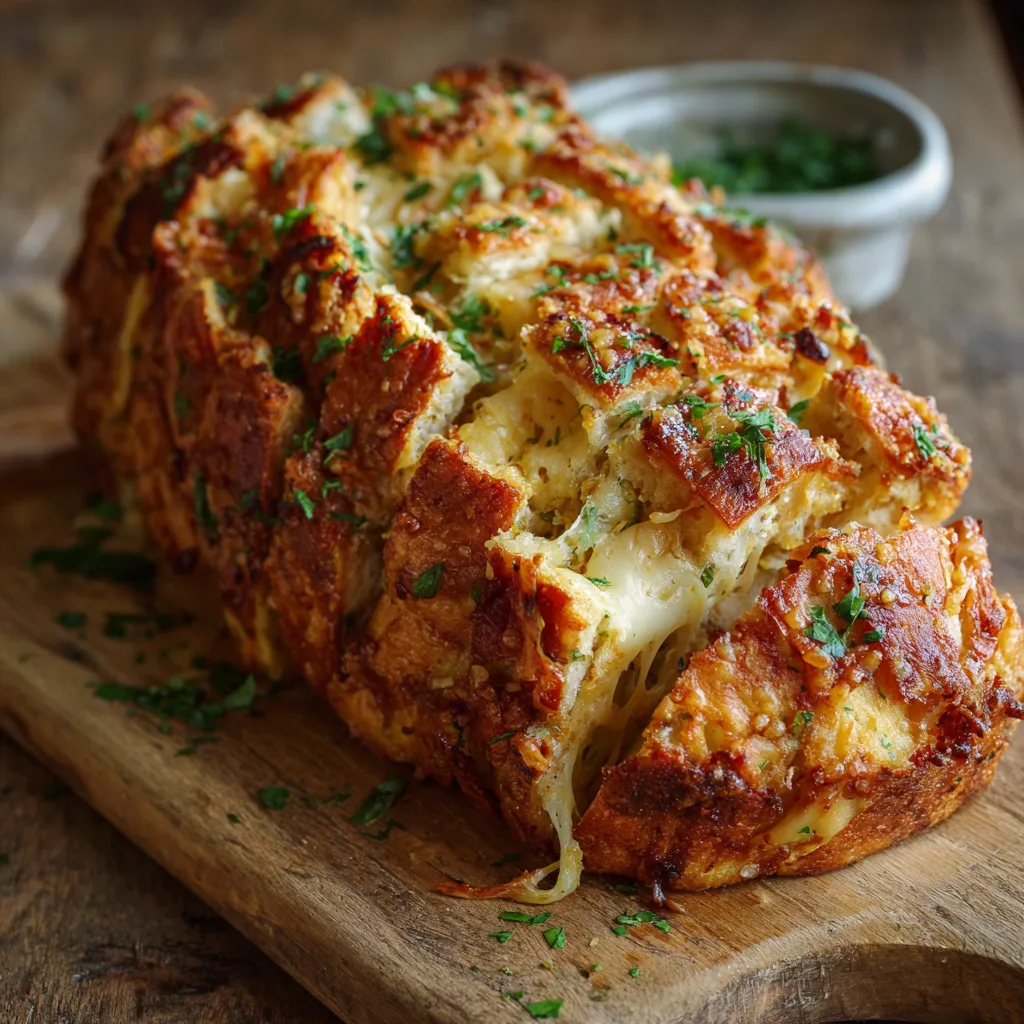
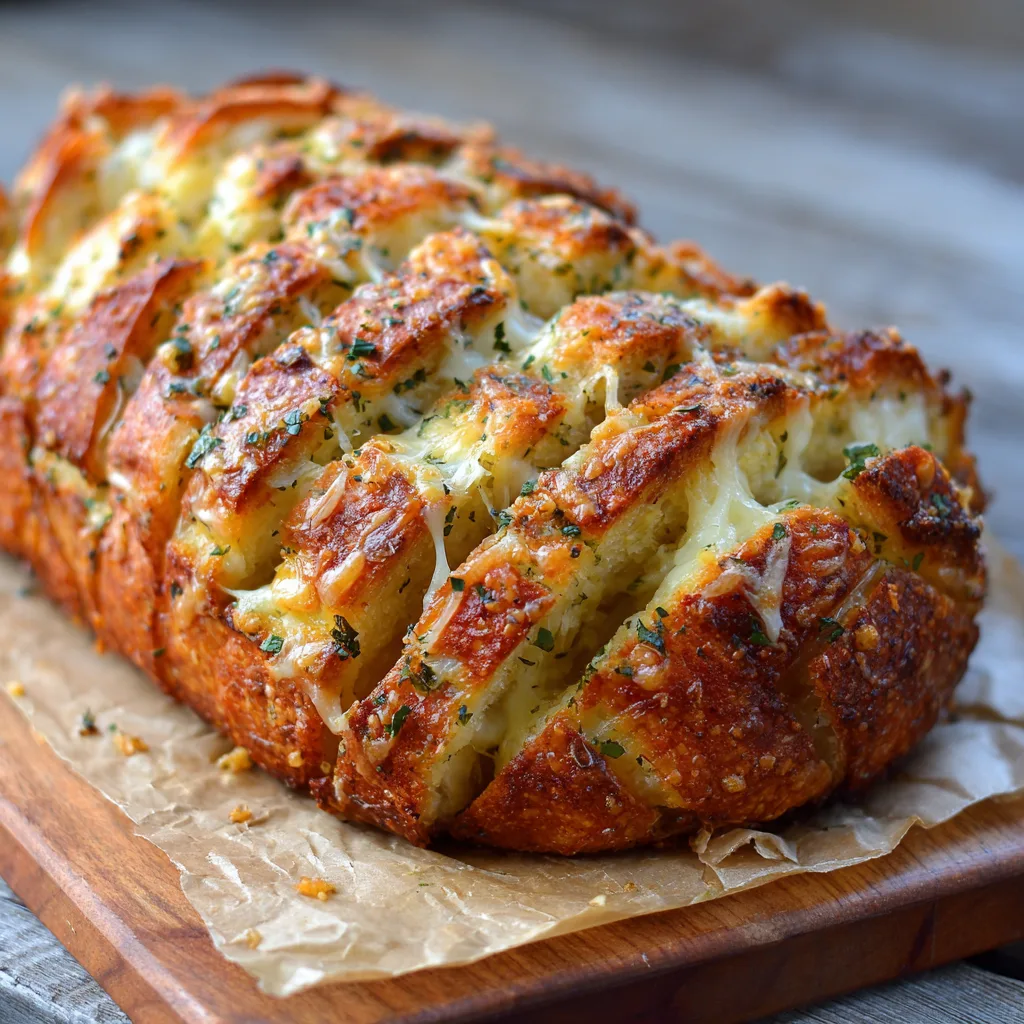
Cheesy Garlic Pull-Apart Bread stands as the pinnacle of comfort food: a golden-brown, rustic loaf scored into diamond crevices, generously saturated with herb-infused garlic butter, and stuffed with a blend of gooey, savory cheese. It is an edible centerpiece, designed for sharing, where every tear-off piece delivers a satisfying ratio of crust, melted cheese, and intensely flavored garlic butter. Whether served as a high-impact appetizer at a party or a perfect accompaniment to pasta or soup, this recipe delivers maximum flavor with minimal fuss by leveraging the convenience of a sturdy, pre-baked rustic loaf.
Ingredients
For the Loaf:
-
1 large round, rustic loaf (boule) or oblong country loaf (sourdough or French bread works best)
-
1 cup (8 oz) shredded low-moisture mozzarella cheese
-
½ cup (2 oz) grated Parmesan cheese
-
Optional: ¼ cup shredded sharp cheddar or Monterey Jack cheese (for enhanced flavor)
For the Garlic Butter:
-
1 stick (½ cup / 113g) unsalted butter, melted
-
5–6 cloves fresh garlic, finely minced
-
2 tablespoons fresh parsley, finely chopped (or 1 tbsp dried parsley)
-
1 teaspoon dried Italian seasoning (optional)
-
½ teaspoon sea salt
-
¼ teaspoon freshly ground black pepper
Step-by-Step Instructions
-
Preheat and Prep the Loaf: Preheat your oven to 350°F (175°C). Line a baking sheet with foil and set aside. Using a sharp serrated knife, score the loaf crosswise into a diamond pattern, making cuts approximately 1 inch apart. Crucially, cut deep enough to reach the bottom crust, but do not slice all the way through the loaf, ensuring the base remains intact.
-
Prepare the Garlic Butter: In a small saucepan or microwave-safe bowl, melt the butter. Stir in the minced garlic, parsley, Italian seasoning, salt, and pepper. If using fresh garlic, gently cook the mixture over low heat for 1–2 minutes until the garlic is fragrant but not browned, which mellows the raw bite and enhances the flavor. Remove from heat.
-
Stuff the Cheese: Gently pull open the scored crevices of the bread. Combine the mozzarella, Parmesan, and any optional cheese in a bowl. Using your fingers, carefully stuff the cheese mixture generously into all the cracks and openings of the bread. Push the cheese deep down into the base of the loaf for maximum melt.
-
Drizzle the Butter: Spoon or brush the prepared garlic butter mixture evenly over the entire loaf, making sure the mixture drips deep into the cheese-stuffed crevices. Use all of the butter mixture.
-
Wrap and Bake: Place the stuffed loaf onto the prepared foil-lined baking sheet. Tightly wrap the loaf in the aluminum foil, sealing the top completely. This initial step steams the bread, ensuring the butter melts perfectly and the cheese turns gooey. Bake for 15 minutes.
-
Melt and Crisp: Carefully open the foil (uncovering the top of the bread completely) and return the loaf to the oven for an additional 10–15 minutes, or until the cheese is bubbling, the exposed crust is golden brown, and the garlic butter is sizzling.
-
Serve: Remove from the oven, transfer to a platter, and serve immediately while hot, allowing guests to tear off their own cheesy, garlicky pieces.
The Art of the ‘Crack’: Selecting and Scoring the Perfect Loaf
The structural integrity of this recipe relies almost entirely on the quality and preparation of the bread base. Choosing the right loaf and executing the ‘crack’ technique correctly ensures that the bread can absorb the butter mixture while containing the copious amounts of melting cheese.
Bread Selection
For the cross-hatched, “crack bread” method, crusty and dense loaves are superior to soft sandwich bread.
-
Sourdough Boule: The slightly chewy crust and tangy flavor of a rustic sourdough boule provide the best contrast to the rich, savory filling. Its dense crumb holds up well during the stuffing process.
-
Country Loaf (Pain de Campagne): Similar to sourdough, these loaves offer a sturdy crust and a rich flavor profile.
-
Vienna or French Bread: While effective, ensure the crust is not too soft. A crustier base will provide stability when the loaf is lifted and pulled apart.
The Cross-Hatch Technique
The method of scoring the loaf, often called the cross-hatch or diamond pattern, is what defines “pull-apart” in this context.
-
The First Cut: Use a sharp, sturdy serrated knife. Make diagonal cuts one way, approximately one inch apart, ensuring the knife stops just short of cutting through the bottom crust. This preserves the loaf’s base, acting like a hinged tray to hold the ingredients.
-
The Second Cut: Turn the loaf 90 degrees and repeat the diagonal cuts, creating the diamond pattern.
-
The Function: Each intersection of the cuts forms a small pocket or crevice. When the loaf is baked, the butter melts into the porous bread, and the cheese melts into these pockets, creating individual, sealed portions that are easily separated by hand. A well-scored loaf means every single piece has cheese and butter embedded within.
Mastering the Flavor Fusion: Garlic Butter and Cheese Blends
While the basic components of Cheesy Garlic Pull-Apart Bread are simple, the quality of the filling is paramount. Optimizing the preparation of the garlic butter and selecting the perfect cheese blend elevates the dish from basic garlic bread to an irresistible delicacy.
Optimizing the Garlic Butter
Fresh garlic is highly recommended over powder, offering a pungent aroma and complex flavor. However, the preparation method significantly impacts the final taste:
-
Sautéed Garlic (Recommended): Lightly cooking the minced garlic in melted butter for one to two minutes (as described in the main recipe) mellows its sharp, raw edge, replacing it with a sweeter, more aromatic depth that permeates the bread beautifully. Ensure the garlic never browns or burns, as burnt garlic turns bitter.
-
Raw Garlic: Mixing raw minced garlic directly into softened or melted butter offers the strongest, most pungent flavor. This is suitable for those who prefer an intense garlic hit, but it may be too sharp for some palates.
-
Roasted Garlic: For a gourmet twist, roasting a head of garlic until soft and squeezing the sweet paste into the butter yields a rich, caramelized, and slightly earthy flavor that is less harsh than fresh garlic.
The Ideal Three-Cheese Blend
A successful pull-apart bread requires a balance between stretch (mozzarella) and flavor (Parmesan/Cheddar).
-
The Go-Getter (Mozzarella): Low-moisture, shredded mozzarella is non-negotiable. Its high moisture content is reduced, making it melt beautifully without leaching excessive water into the bread, providing that characteristic, stringy “pull.”
-
The Savory Sharpener (Parmesan): Finely grated Parmesan or Parmigiano-Reggiano adds a powerful, salty umami depth. Because it doesn’t melt in strings, it binds with the butter and coats the inside of the crevices, creating a crisp, flavorful crust on the cheese itself.
-
The Creamy Counterpart (Cheddar/Monterey Jack): Incorporating a small amount of sharp cheddar or creamy Monterey Jack adds complexity and a beautiful orange hue. The cheddar introduces a tangy note, while Jack cheese ensures a smoother, creamier melt.
Creative Customizations and Dough Variations
While the classic recipe is a masterpiece, the pull-apart concept lends itself perfectly to creative culinary exploration, allowing you to easily transform the bread to match any meal or occasion.
Flavor and Spice Upgrades
-
Herbal Infusions: Beyond parsley, incorporate fresh oregano, thyme, or rosemary into the butter mix for a Mediterranean profile. A pinch of crushed red pepper flakes can introduce a pleasant background heat.
-
Protein Additions: Stir finely chopped, pre-cooked bacon pieces, diced pepperoni, or sun-dried tomatoes (drained and chopped) into the cheese mixture before stuffing the loaf. This transforms the appetizer into a heartier mini-meal.
-
Dipping Sauces: Enhance the serving experience by offering various dipping sauces. Classic marinara sauce complements the Italian flavors, while a side of ranch dressing or a rich pesto offers cool, creamy contrast.
Alternative Bread Techniques (Scratch and Semi-Homemade)
For the baker looking to control every element, there are two primary methods that begin with dough rather than a pre-baked loaf:
-
Monkey Bread Style (Bundt Pan): This technique involves cutting fresh or store-bought yeast dough into small, 1-inch balls. Each ball is dipped individually into the butter/cheese mix, then piled high into a greased Bundt pan. This method results in a softer, fluffier texture, similar to cinnamon rolls, and is excellent for those seeking a richer, brioche-like consistency.
-
Layered Loaf Style (Loaf Pan): This approach requires rolling the homemade dough into a large rectangle, spreading the entire surface with the garlic butter, sprinkling it with cheese, and then cutting the sheet into stacked squares. The squares are then placed on their side in a loaf pan, resembling a stack of cheesy playing cards. This creates distinct, layered slices that pull apart cleanly.
Serving, Storage, and Reheating for Maximum Enjoyment
To fully capitalize on the irresistible nature of Cheesy Garlic Pull-Apart Bread, proper handling after baking is essential.
Serving Temperature and Pairing
This bread must be served immediately upon coming out of the oven. The peak experience occurs when the cheese is fully melted and stretching, and the butter is still hot and glistening. Even 10 minutes of cooling will cause the cheese to firm up, making the bread less “pull-apart” and more “tear-off.”
Ideal Pairings:
-
Pasta Night: A classic side for spaghetti, lasagna, or ravioli.
-
Soup and Chili: The perfect accompaniment for dipping into hearty tomato soup, beef chili, or French Onion Soup.
-
Appetizer Spread: Serve alongside crudités, olives, cured meats, and dipping sauces (like pesto or marinara) for a cohesive party spread.
Storage and Reheating
While pull-apart bread is best eaten fresh, leftovers can be preserved for a day or two without significant loss of quality.
-
Storage: Allow the bread to cool completely to room temperature. Wrap the entire leftover loaf tightly in aluminum foil. Store at room temperature for up to 2 days, or refrigerate if the filling contains meats or highly perishable ingredients.
-
Reheating (Oven Method): The oven is the only reliable way to restore the crust and melt the cheese. Preheat the oven to 300°F (150°C). Keep the loaf wrapped tightly in the foil and bake for 10–15 minutes, or until the cheese is gooey and the loaf is warmed through. For a slightly crisper crust, open the foil for the last 5 minutes. Avoid the microwave, as it will make the bread tough and rubbery.