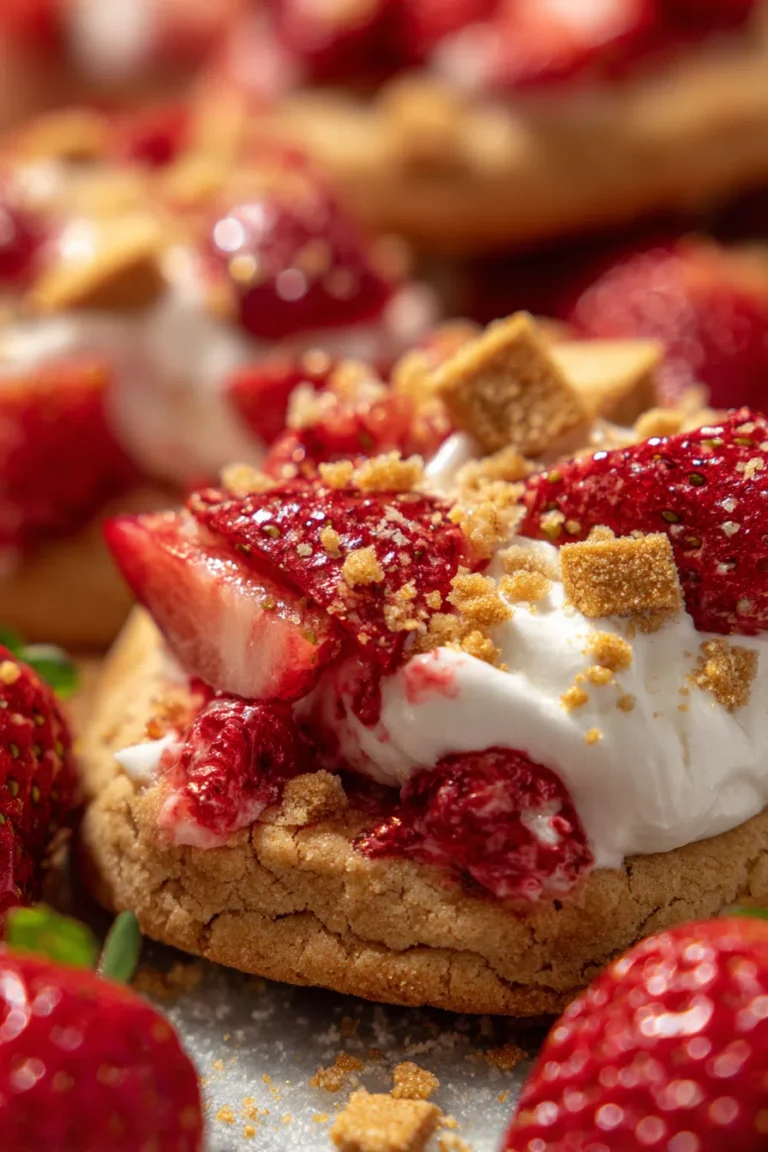
The “Creamy Lemon Pie Cookie” is the quintessential fusion of two beloved desserts: the light, crisp texture of a buttery cookie and the vibrant, velvety filling of a classic lemon pie. This baked treat captures the complexity of a multi-layered dessert in a single, manageable bite. While the concept has a few delicious interpretations, the most elegant execution involves a soft, chewy lemon sugar cookie topped with a tangy homemade lemon curd and a toasted cloud of Swiss meringue. It is a show-stopping dessert that requires precision but rewards the baker with a balanced symphony of textures—crisp edge, tender center, smooth curd, and fluffy meringue. Mastering this recipe is a journey into balanced flavor and structural integrity, culminating in a bright, irresistible confection perfect for any season.
Ingredients
For the Soft Lemon Cookies
-
2 ½ cups (315g) all-purpose flour
-
1 teaspoon baking powder
-
½ teaspoon kosher salt
-
1 cup (225g) unsalted butter, softened
-
1 ¼ cups (250g) granulated sugar
-
Zest of 3 medium lemons
-
1 large egg, room temperature
-
1 large egg yolk, room temperature
-
1 teaspoon vanilla extract
For the Silky Lemon Curd
-
½ cup (100g) granulated sugar
-
Zest of 1 lemon
-
½ cup (120ml) fresh lemon juice
-
4 large egg yolks
-
2 large whole eggs
-
Pinch of salt
-
4 tablespoons (56g) unsalted butter, cubed and chilled
For the Swiss Meringue Topping
-
4 large egg whites, room temperature
-
1 cup (200g) granulated sugar
-
½ teaspoon cream of tartar (optional, for stability)
-
1 teaspoon vanilla extract
Step-by-Step Instructions
1. Prepare the Lemon Cookie Dough Preheat the oven to 350°F (175°C) and line baking sheets with parchment paper. In a medium bowl, whisk together the flour, baking powder, and salt. In a separate large mixing bowl, rub the lemon zest into the granulated sugar using your fingertips until the sugar is fragrant and moist—this maximizes the lemon flavor. Cream the softened butter into the lemon sugar mixture until light and fluffy. Beat in the whole egg, egg yolk, and vanilla extract until just combined. Gradually mix the dry ingredients into the wet mixture on low speed until a soft dough forms, being careful not to overmix. Scoop the dough (about 2 tablespoons per cookie) onto the prepared baking sheets. Use a lightly floured, flat-bottomed measuring cup (or the back of a spoon) to slightly flatten the dough balls.
2. Bake and Create the Divot Bake the cookies for 8 to 10 minutes, or until the edges are just starting to set and turn light gold. The centers should still look slightly underdone. Remove the baking sheet from the oven. Immediately use a slightly greased, flat-bottomed object (like a small measuring spoon or the back of a teaspoon) to gently press a shallow indentation or “well” into the center of each warm cookie. Return the cookies to the oven for another 2 to 3 minutes to set the divots. Allow the cookies to cool completely on a wire rack.
3. Make the Lemon Curd In a medium, heatproof saucepan, combine the sugar, lemon zest, lemon juice, whole eggs, egg yolks, and salt. Whisk constantly over medium-low heat. Continue whisking until the mixture thickens significantly, enough to coat the back of a spoon (reaching 175°F/80°C). Do not let it boil vigorously. Remove from the heat and immediately pour the hot curd through a fine-mesh sieve into a bowl containing the chilled butter cubes. Whisk until the butter is fully melted and the curd is perfectly smooth. Cover the curd with plastic wrap, pressing it directly onto the surface to prevent a skin from forming. Chill in the refrigerator for at least 2 hours or until firm.
4. Assemble and Finish with Meringue Once the cookies and curd are cool, preheat the broiler or prepare a kitchen torch. Fill the divot of each cookie with about 1 to 1 ½ tablespoons of the chilled lemon curd. To make the meringue, combine the egg whites, sugar, and cream of tartar in a heatproof bowl set over a saucepan of simmering water (a double boiler). Whisk constantly until the sugar is completely dissolved and the mixture is warm to the touch (around 160°F/71°C). Remove from heat and transfer the mixture to the bowl of a stand mixer fitted with the whisk attachment. Beat on high speed until stiff, glossy peaks form (a Swiss meringue). Fold in the vanilla. Transfer the meringue to a piping bag fitted with a star tip, or simply use a spoon to dollop and swirl the topping onto the curd-filled cookies. Use a kitchen torch to toast the meringue until golden brown, or place the cookies under a preheated broiler for 30 to 60 seconds, watching carefully to prevent burning. Serve chilled or at room temperature.
The Foundation: Crafting the Perfect Lemon Cookie Base
The textural contrast between the soft cookie and the creamy filling is what elevates the Creamy Lemon Pie Cookie from a simple baked good to a layered dessert experience. Achieving the ideal cookie base is paramount, requiring careful attention to ingredients and technique.
Most successful recipes for this treat utilize a buttery, soft sugar cookie dough. The key to intense lemon flavor rests in the technique of “zesting into sugar.” By rubbing the fresh lemon zest into the granulated sugar with your fingertips before adding the butter, you release the essential oils directly into the sugar crystals. This simple step ensures maximum aromatic impact, making the cookie intensely bright.
When it comes to texture, controlled spreading is crucial. Ingredients should always be at room temperature to ensure they cream together properly, resulting in an airy, light dough. However, once mixed, the dough benefits from a short chill (30 minutes to an hour). Chilling prevents excessive spread during baking, keeping the cookie thick and the edges defined. Furthermore, the dough must be slightly under-baked during the initial cook time. This ensures the center remains soft and pliable when creating the divot for the filling.
The indentation, or “well,” is structurally necessary to contain the curd. This must be pressed in immediately after the cookie is removed from the first bake while the cookie is still hot and flexible. Returning the cookie to the oven for a brief second bake sets the shape permanently, creating a stable foundation that prevents the creamy filling from spilling over or soaking into the base. For those seeking a flakier, truly pie-like crust, substituting the cookie dough for refrigerated, pre-made pie crust (rolled out and cut into rounds) provides a faster, lighter alternative that requires careful sealing before baking to hold the filling.
The Heart of the Pie: Achieving Silky Lemon Cream and Curd
The defining “creamy” element of this dessert comes from the lemon filling, which generally falls into two categories: a traditional cooked lemon curd or a simpler, no-bake condensed milk filling. Each offers a distinct flavor and texture profile, allowing for recipe customization based on desired complexity and tartness.
Traditional Lemon Curd provides the deepest, richest flavor. It relies on egg yolks, whole eggs, fresh lemon juice, sugar, and butter, cooked gently over low heat or in a double boiler. The major technique here is tempering or, more simply, cooking the eggs slowly and continuously. The mixture must be stirred constantly to prevent the eggs from scrambling. The target temperature is typically 175°F to 180°F (80°C to 82°C)—the point at which the egg proteins coagulate and thicken the mixture into a luscious cream, but before they curdle. Straining the warm curd through a fine-mesh sieve into the chilled butter ensures a flawlessly smooth texture, free of any small egg solids.
Condensed Milk Filling, commonly seen in quick cream pie recipes, offers an ultra-creamy, no-fail approach akin to Key Lime Pie. This filling uses sweetened condensed milk, fresh lemon juice, and egg yolks. The acidity of the lemon juice reacts with the condensed milk to thicken it chemically without extensive cooking, a process known as acid coagulation. This results in a filling that is exceptionally smooth, bright, and stable after baking. When incorporating this filling into a cookie, it requires a brief second bake (around 10–12 minutes) to set the eggs yolks and solidify the filling enough to be sliced or handled. Regardless of the method, always use freshly squeezed lemon juice; bottled juice lacks the necessary acidity and brightness to truly cut through the sweetness of the base and topping.
Beyond the Standard: Meringue, Glazes, and Sandwich Variations
While the classic lemon curd on a cookie is delicious, the addition of a topping or an alternative structure transforms it, fulfilling the promise of “pie” perfection.
The most common pie-inspired topping is Meringue. For this type of dessert, the Swiss Meringue method is often preferred for its stability and plush texture. It involves heating the egg whites and sugar together over a water bath, pasteurizing the mixture while dissolving the sugar. Whipping this warm mixture results in a dense, marshmallow-like foam that holds its shape beautifully for piping and toasting. Toasting, whether with a kitchen torch or under a broiler, is essential for a finished look and adding a complementary smoky-sweet flavor. For a more structured, glossy peak, adding a small amount of cream of tartar can aid in stabilizing the egg whites.
For a simpler finish, a Bright Lemon Glaze (Result 1.3) can be used. This involves a simple mixture of powdered sugar whisked with a small amount of lemon juice (or cream/milk). The glaze dries quickly, providing a clean, tart finish and a satisfying crunch.
A complete structural variation is the Cream Pie Sandwich Cookie (Result 1.2). Instead of filling a divot, two soft, chewy lemon cookies are used to sandwich a generous amount of creamy frosting. This filling is typically a stable mixture of softened butter, cream cheese (or vegan substitutes), and powdered sugar, heavily flavored with lemon zest and extract. This approach yields a moister, softer final product that should be stored in the refrigerator to keep the cream filling firm. Oatmeal or brown sugar cookie bases often pair well with this sandwich style, offering a chewiness that contrasts nicely with the smooth cream.
Mastering the Assembly, Storage, and Presentation
The final steps of assembly and serving are where the Creamy Lemon Pie Cookie truly comes to life. Success relies on proper timing and temperature control.
Assembly Tips:
-
Temperature is Key: Ensure both the cookie bases and the lemon curd are completely chilled before assembly. Warm curd will not hold its structure and will make the cookie soggy.
-
Filling Stability: If using a meringue topping, ensure the meringue is piped or dolloped onto the chilled curd and then immediately torched or broiled. This provides a clean line between the layers. If the filling is the condensed milk variety, it must be baked in the divot for the recommended time (typically 5-10 minutes) and then chilled again before any whipped cream or meringue is applied.
-
Preventing Runniness: For simple lemon cookies that are iced rather than filled, ensure the glaze is thick enough not to run off the edges, usually a consistency similar to heavy cream.
Storage and Serving: Due to the perishable nature of the egg-based curd and the dairy in the meringue or cream fillings, these cookies must be stored properly. They should be kept in an airtight container in the refrigerator.
-
Shelf Life: Most lemon pie cookies maintain their best quality for up to three to five days when refrigerated.
-
Best Served Chilled: Serving the cookies slightly chilled enhances the firmness of the curd or cream filling, providing a better texture contrast against the soft cookie base.
-
Presentation: For a beautiful display, garnish the finished cookies with a light dusting of powdered sugar, a tiny curl of lemon zest, or fresh berries like raspberries or blueberries, which provide a beautiful color contrast and an additional layer of tartness. When making the meringue topping, a star tip gives a classic, elegant swirl that mimics a full-sized pie. By focusing on these final details, you ensure a professional and memorable dessert experience.