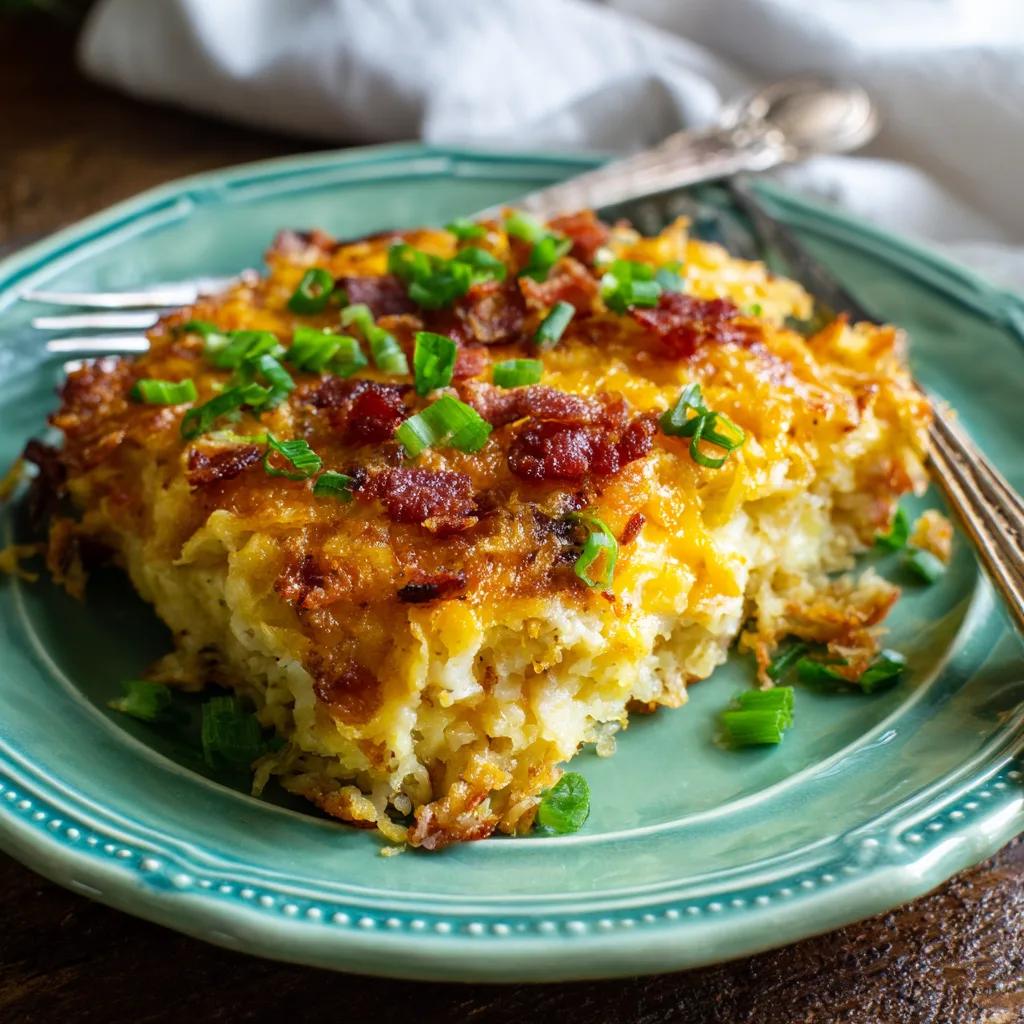
The Cheesy Hashbrown Breakfast Casserole stands as the undisputed king of brunch dishes, offering a perfect, savory balance of fluffy eggs, hearty potatoes, savory breakfast meats, and a generous blanket of melted cheese. More than just a meal, it’s a time-honored tradition—a comforting, all-in-one dish that is as versatile as it is delicious, capable of feeding a hungry crowd on a busy holiday morning or simplifying a quiet weekend breakfast. Its popularity stems from two core strengths: rich, satisfying flavor and its effortless ‘make-ahead’ nature, allowing hosts to spend less time cooking and more time enjoying the company.
Ingredients
-
1 (30-32 oz) bag frozen shredded hash brown potatoes, fully thawed and patted dry
-
1 pound cooked breakfast sausage (or ham/bacon), crumbled and drained
-
2 cups shredded sharp Cheddar cheese, divided
-
1 cup shredded Monterey Jack or Swiss cheese
-
1/2 cup finely chopped yellow onion (optional, sautéed lightly if desired)
-
8 large eggs
-
1 cup whole milk or evaporated milk
-
1 teaspoon seasoned salt or Kosher salt
-
1/2 teaspoon black pepper
-
1/2 teaspoon garlic powder
-
1/2 teaspoon dry mustard powder (optional, for flavor depth)
-
2 tablespoons melted butter (for the potatoes)
-
Chopped green onions or chives, for garnish
Step-by-Step Instructions
1. Prepare the Base and Preheat: Preheat your oven to 375°F (190°C). Lightly grease a 9×13-inch baking dish. Ensure your hash browns are fully thawed; if they are overly wet, press them between layers of paper towels or a clean kitchen towel to remove excess moisture. This step is critical for a non-soggy casserole.
2. Create a Layer of Crispness (Optional but Recommended): Spread the thawed and dried hash browns evenly into the prepared dish. Drizzle or gently toss the potatoes with the 2 tablespoons of melted butter. Bake the hash browns alone for 15-20 minutes until they just begin to set and turn light golden brown around the edges. This pre-bake step prevents the final casserole from having a gummy or undercooked base.
3. Combine Wet Ingredients: While the hash browns are pre-baking, whisk together the eggs, milk, seasoned salt, black pepper, garlic powder, and dry mustard powder (if using) in a large bowl. Ensure the ingredients are fully combined and the mixture is light and frothy.
4. Assemble the Filling: Remove the hash browns from the oven. In a separate large bowl, combine the cooked sausage, onion, 1 cup of the Cheddar cheese, and all of the Monterey Jack or Swiss cheese. Gently stir in the partially baked hash browns.
5. Layer and Soak: Transfer the entire mixture back into the prepared 9×13-inch dish, spreading it into an even layer. Pour the whisked egg mixture slowly and evenly over the top of the hash brown and meat mixture, ensuring the liquid permeates all the way to the bottom corners of the dish.
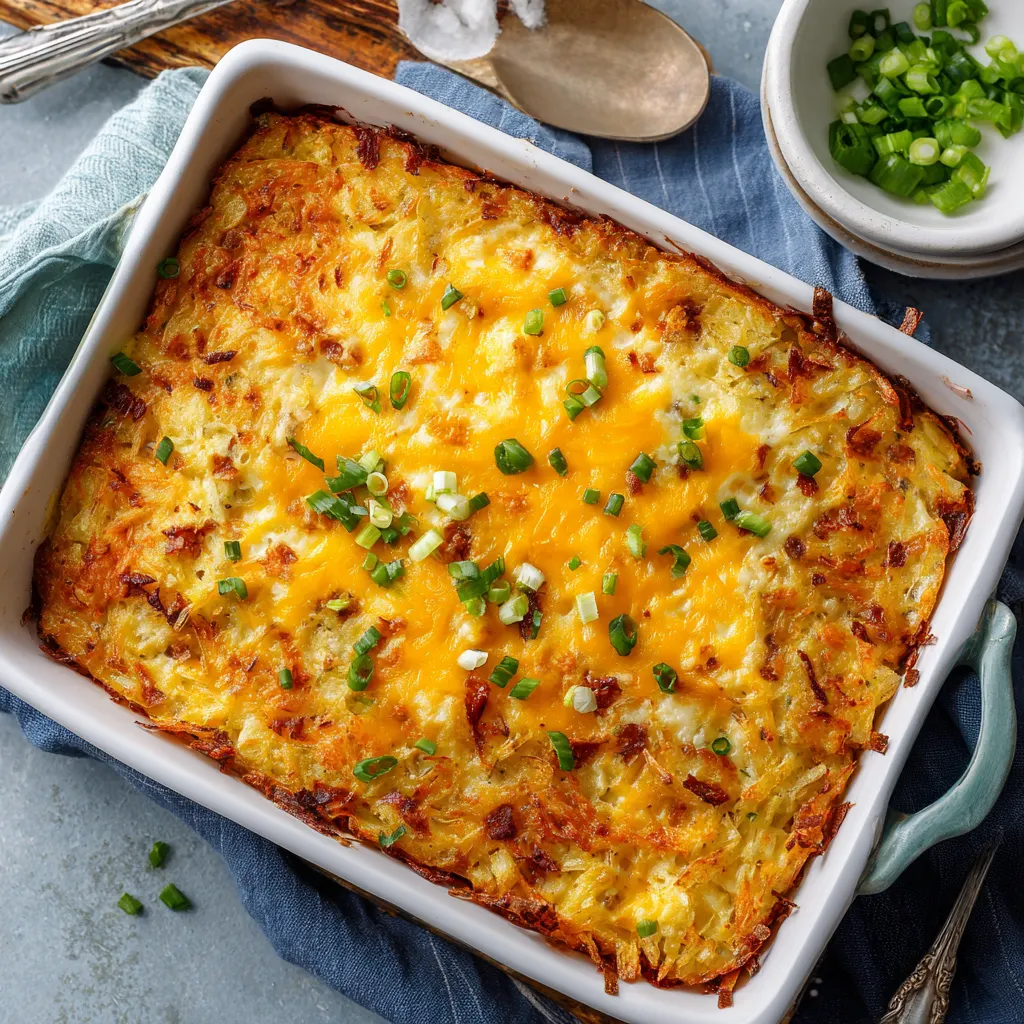
6. Bake to Perfection: Cover the casserole dish loosely with aluminum foil and bake for 30 minutes. Remove the foil and sprinkle the remaining 1 cup of Cheddar cheese over the top. Continue baking, uncovered, for an additional 15-25 minutes, or until the center is set, the edges are bubbly, and the top layer of cheese is melted and lightly golden. The internal temperature should reach 160°F (71°C) when tested with an instant-read thermometer.
7. Rest and Serve: Remove the casserole from the oven and let it rest for 5-10 minutes before cutting into squares and serving. Garnish with fresh chopped green onions or chives for color and fresh flavor.
The Essential Guide to Building the Perfect Casserole Base
The quality of a hash brown breakfast casserole hinges on its foundation: the potatoes. The biggest challenge cooks face is preventing a soggy, gummy layer at the bottom. Achieving a crisp, structural base requires careful technique, primarily centered around moisture control and initial baking.
Tackling the Soggy Potato Problem:
-
Thawing and Drying is Non-Negotiable: Frozen hash browns, while convenient, contain a substantial amount of water. They must be completely thawed, ideally overnight in the refrigerator, and then squeezed or patted dry before use. Excess moisture will release during baking, steam the casserole, and prevent the eggs from setting properly around the potatoes. For large batches, wrapping the thawed hash browns in a clean kitchen towel and wringing out the moisture is the most effective method.
-
The Pre-Bake Step: As detailed in the instructions, dedicating 15–20 minutes to pre-baking the hash browns with a little melted butter is a game-changer. This creates a barrier of partially cooked, slightly crispy potatoes that can better withstand the liquid mixture, ensuring the final result is tender yet firm.
-
Choosing the Right Potato: While shredded hash browns are traditional, many variations incorporate diced or “Southern-style” potatoes. Diced potatoes tend to hold their shape better and are slightly less prone to clumping than finely shredded varieties. Regardless of the cut, ensuring they are not layered too thickly in the baking dish is key to even cooking.
Layering vs. Mixing:
While many recipes call for simply mixing all the ingredients together in a large bowl, a slightly layered approach can enhance both flavor and presentation. Try reserving half of the cheese and sprinkling a layer of it over the pre-baked potatoes before pouring the egg mixture over the top. This creates a flavorful, cheesy bond between the base and the filling, adding an extra dimension of texture and preventing the eggs from running straight to the bottom.
Protein, Cheese, and Flavor Profile Customizations
The “Cheesy Hashbrown Breakfast Casserole” recipe is highly adaptable, allowing for endless customization to suit specific palates, dietary needs, or ingredients on hand. Optimizing the recipe often means making strategic substitutions in the core components.
Protein Powerhouse Swaps:
The most common proteins are cooked, crumbled breakfast sausage (for classic flavor), cubed Black Forest or smoked ham (popular for holiday versions), and crispy, drained bacon pieces. However, for those seeking alternatives, excellent substitutions include:
-
Spicy Kick: Use hot Italian sausage or add a can of drained diced green chiles to the mixture.
-
Lighter Option: Substitute turkey sausage or lean Canadian bacon.
-
Unique Flavor: Try crumbled chorizo sausage for a Spanish or Mexican-inspired twist.
Crucially, all meat additions must be fully cooked and drained of excess grease before being incorporated. Residual fat will contaminate the egg mixture and lead to a greasy, unbalanced final product.
The Art of the Cheese Blend:
While Sharp Cheddar provides the signature flavor, blending cheeses introduces complexity and improves texture. The best combinations for a creamy, balanced melt include:
-
For Stretch and Creaminess: Monterey Jack, Mozzarella, or Havarti.
-
For Sharpness and Depth: Aged Cheddar, Pepper Jack (for heat), or Smoked Gouda.
-
Moisture and Texture Boost: Some recipes utilize ricotta cheese, cottage cheese, or sour cream mixed into the eggs. These dairy additions introduce a beautiful creaminess and loft to the final bake, preventing the casserole from becoming overly dry. For cottage cheese, the curds typically melt into the background, providing moisture without a noticeable texture difference.
Aromatic and Seasoning Enhancements:
Beyond basic salt and pepper, the secret to a professional-grade casserole lies in leveraging pantry staples:
-
Dry Mustard Powder: A small amount (1/2 teaspoon) significantly enhances the savory notes of both the cheese and the eggs without imparting a detectable mustard flavor.
-
Onion and Garlic Powder: These deliver concentrated flavor that blends seamlessly into the eggs.
-
Fresh Herbs: Stir in finely chopped fresh chives, parsley, or dill just before baking for a vibrant finish.
Mastering the Make-Ahead & Freezing Process
The Cheesy Hashbrown Breakfast Casserole is the quintessential make-ahead brunch dish, which is essential for low-stress holiday entertaining. Knowing the proper assembly and storage techniques ensures optimal flavor and texture when it’s time to bake.
The Overnight Method (Refrigeration):
The best practice for making this casserole ahead is to assemble it completely, but delay the final bake.
-
Assemble: Follow all recipe steps through instruction 5 (combining all ingredients and pouring the egg mixture over the top).
-
Cover and Chill: Cover the dish tightly with plastic wrap and aluminum foil to prevent the hash browns from drying out or absorbing refrigerator odors. Refrigerate for a minimum of 8 hours, up to 24 hours. The eggs and potatoes will “marinate” overnight, enhancing the overall flavor.
-
Baking Adjustment: On the morning of serving, pull the casserole from the refrigerator at least 30 minutes to one hour before baking to allow it to temper slightly (reducing the thermal shock). Increase the initial covered baking time by approximately 10–15 minutes, as the casserole is starting cold. Then proceed with the uncovered, final cheese baking step as usual.
Freezing and Reheating:
This casserole freezes exceptionally well, making it ideal for future meals.
-
Freezing an Unbaked Casserole: Assemble the dish, cover tightly with foil, and freeze for up to 3 months. To bake, thaw the casserole overnight in the refrigerator, then follow the standard, adjusted baking instructions for a refrigerated casserole.
-
Freezing Leftovers: Cut the fully cooked and cooled casserole into individual portions. Wrap each piece tightly in plastic wrap and store in a freezer bag. Reheat individual portions in the microwave or in a 350°F oven for 15-25 minutes until heated through.
Elevating Texture: Crunchy Toppings and Creamy Bases
While a great casserole is creamy and moist on the inside, a balanced experience often requires an element of contrasting texture on the outside. Furthermore, understanding the two major types of hashbrown casserole recipes allows for ultimate flavor control.
The Crumbly, Crunchy Topping:
For a contrasting crunch that many find nostalgic or necessary, especially in versions without meat, consider a buttery cornflake or breadcrumb crust:
-
Buttered Cornflakes: Mix 2 cups of crushed cornflakes with 1/4 cup of melted butter. Sprinkle this mixture over the casserole during the last 15 minutes of baking, typically when you add the final layer of cheese. This provides a golden, savory crunch that holds up well.
-
French Fried Onions: For a sharper, savorier flavor, a layer of canned French fried onions can be added along with the final cheese layer.
The Creamy Base Divide (Egg vs. Soup):
The search results for “Cheesy Hashbrown Casserole” reveal two distinct recipe styles, both popular:
-
The Egg-Based Casserole (Breakfast Focus): This version (detailed above) relies on whisked eggs and milk/cream to bind the potatoes and protein. The result is a lighter, fluffier texture, similar to a frittata or quiche, and is traditionally served for breakfast or brunch.
-
The Cream-of-Soup Casserole (Side Dish Focus): This style often omits the eggs and uses condensed cream of chicken, mushroom, or cheddar soup combined with sour cream and butter to create an incredibly rich, dense, and creamy base. This version is commonly known as a “Funeral Potatoes” or “Cracker Barrel Copycat” casserole and is often served as a side dish, though it can easily be adapted with meat for breakfast.
For the user targeting “Breakfast Casserole,” the egg-based approach is primary, but incorporating sour cream or a small amount of cottage cheese (as a moisture/protein boost) from the creamy-base tradition can bridge the two styles, ensuring a moist, flavorful outcome.
Serving Suggestions and Holiday Brunch Strategy
A well-executed Cheesy Hashbrown Breakfast Casserole is substantial enough to be a complete meal, but strategic side pairings can elevate the dish and turn it into a memorable brunch spread.
Ideal Pairings:
-
Fresh and Light: Balance the casserole’s richness with a platter of fresh, seasonal fruit or a light green salad tossed with a vinaigrette. Citrus (like orange slices) or bright berries cut through the richness beautifully.
-
Sweet Counterpoint: A classic pairing is a sweet bread or pastry, such as blueberry muffins, cinnamon rolls, or banana bread. Serving a side of warm maple syrup for dipping or drizzling is also popular.
-
Beverage Strategy: Pair with strong coffee, fresh orange juice, or a mimosa (for adult brunches). The acidity helps reset the palate between bites of rich casserole.
Feeding a Crowd and Oven Strategy:
This casserole is a hero for large gatherings because it is inexpensive, easily scalable (double the recipe and use two 9×13 dishes), and, most importantly, frees up the cook’s time.
-
Oven Planning: During holidays like Christmas or Easter, oven space is precious. Since this casserole can be completely assembled the night before and requires a low-to-moderate baking temperature (350°F to 375°F), it often fits perfectly into a busy oven schedule, allowing other items (like baked goods or delicate proteins) to be cooked at different times or temperatures.
-
Presentation: While simple, serving the casserole directly from the attractive baking dish, topped with fresh green garnish, presents a rustic and comforting appeal. Let the casserole rest for the full 10 minutes after baking; this allows the eggs to fully set, ensuring clean, easy slices when serving.